










What Are the Best Types of Picnic Tables for Hospitality Guests?

Quick AnswerThe best picnic tables for hospitality properties are durable commercial models that match how guests will use each outdoor area. Portable Picnic Tables work well where layouts change, Single Pedestal Picnic Tables are suited to permanent dining and gathering spaces, and Ribbon Collection Picnic Tables provide a coordinated, contemporary appearance for hotels, resorts, restaurants, and other design-focused properties.
Outdoor tables should also be selected based on guest capacity, accessibility, maintenance needs, traffic flow, installation requirements, and how well the furniture complements the property’s overall design.
How Do You Choose the Right Outdoor Tables for a Hospitality Property?
Outdoor tables can turn an underused patio, courtyard, lawn, pool area, or walking path into a place where guests can eat, work, relax, or spend time together. However, the table that works well near a casual recreation area may not be the right choice for a formal hotel entrance or restaurant patio.
Hospitality managers need outdoor furniture that supports the guest experience without creating unnecessary maintenance or disrupting pedestrian traffic. Residential tables may be suitable for a private backyard, but hospitality properties typically need commercial outdoor tables designed for frequent use, changing weather conditions, routine cleaning, and long-term exposure.
The best approach is to divide the property into use areas and select a table style for each one. Consider where guests are most likely to gather, how long they will stay, whether the layout needs to change for events, and whether the furniture should coordinate with benches, planters, and trash receptacles.
What Are the Best Types of Picnic Tables for Hotels, Resorts, and Hospitality Properties?
Three useful table styles for hospitality settings are Portable Picnic Tables, Single Pedestal Picnic Tables, and Ribbon Collection Picnic Tables. Each serves a different purpose.
| Table type | Best suited for | Main advantage | Installation approach | Design style |
|---|---|---|---|---|
| Portable Picnic Table | Flexible lawns, courtyards, event areas and seasonal seating | Can be repositioned as guest needs change | Freestanding | Traditional commercial |
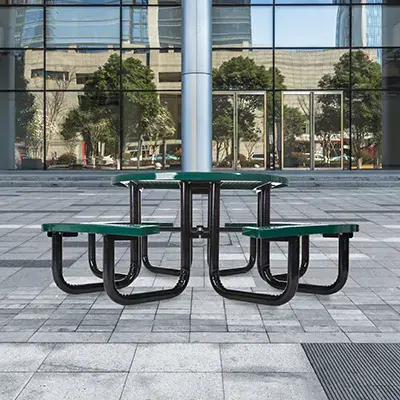
| Single Pedestal Picnic Table | Pool decks, patios, cafés and permanent gathering spaces | Open base area and efficient permanent placement | Typically secured to a prepared surface | Clean and functional |
| Ribbon Collection Picnic Table | Resort courtyards, hotel entrances and coordinated outdoor spaces | Contemporary appearance that matches other site furnishings | Planned permanent placement | Modern and architectural |
When Is a Portable Picnic Table the Best Choice?

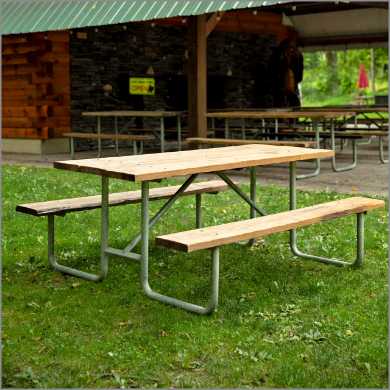
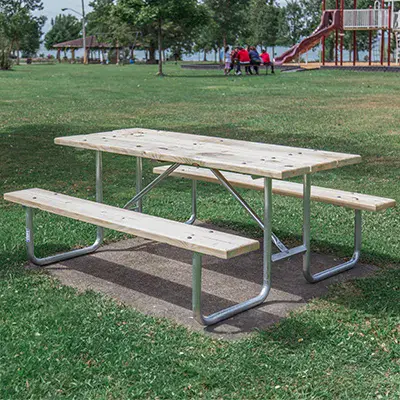
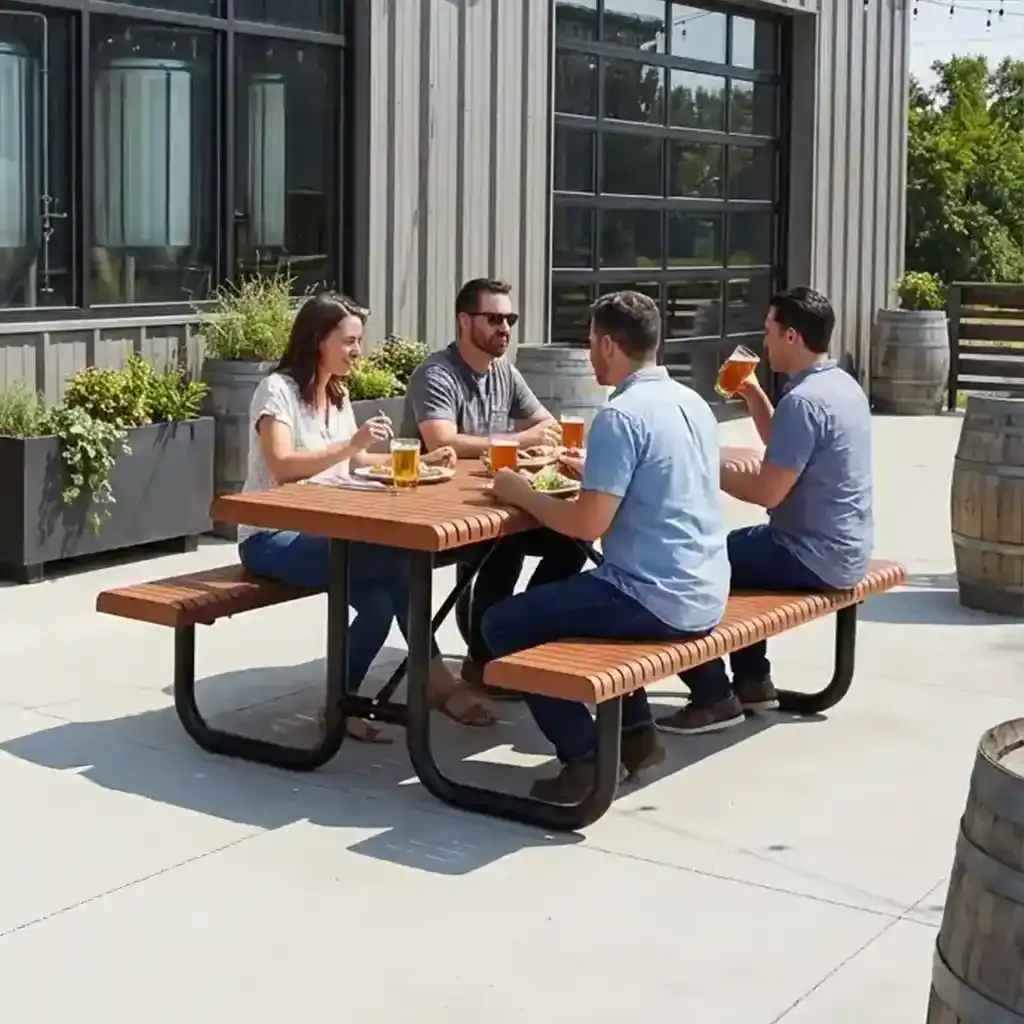
A Portable Picnic Table is a strong option when a hospitality property needs flexibility. It can be used in a lawn, courtyard, picnic area, recreation space, outdoor event area, or seasonal dining zone where the layout may change throughout the year.
Portable tables allow managers to adjust seating arrangements for weddings, corporate events, reunions, outdoor dining, festivals, and changes in guest traffic. They can also be moved temporarily when grounds crews need to mow, clean, repair a surface, or prepare an area for a special event.
Jamestown Advanced Products’ Portable Picnic Table features a walk-through frame designed to reduce trip hazards and improve ease of entry. The commercial construction includes a one-piece frame and components manufactured to meet applicable ASTM material standards.
Best for:
- Hotel lawns and recreation areas
- Resort courtyards with changing layouts
- Seasonal outdoor dining
- Wedding and event spaces
- Camp-style hospitality properties
- Overflow seating near food-service areas
Portability does not mean the table should be placed without a plan. Tables should remain on level, stable surfaces and should not reduce the clear width of guest walkways or accessible routes.
When Is a Single Pedestal Picnic Table the Best Choice?

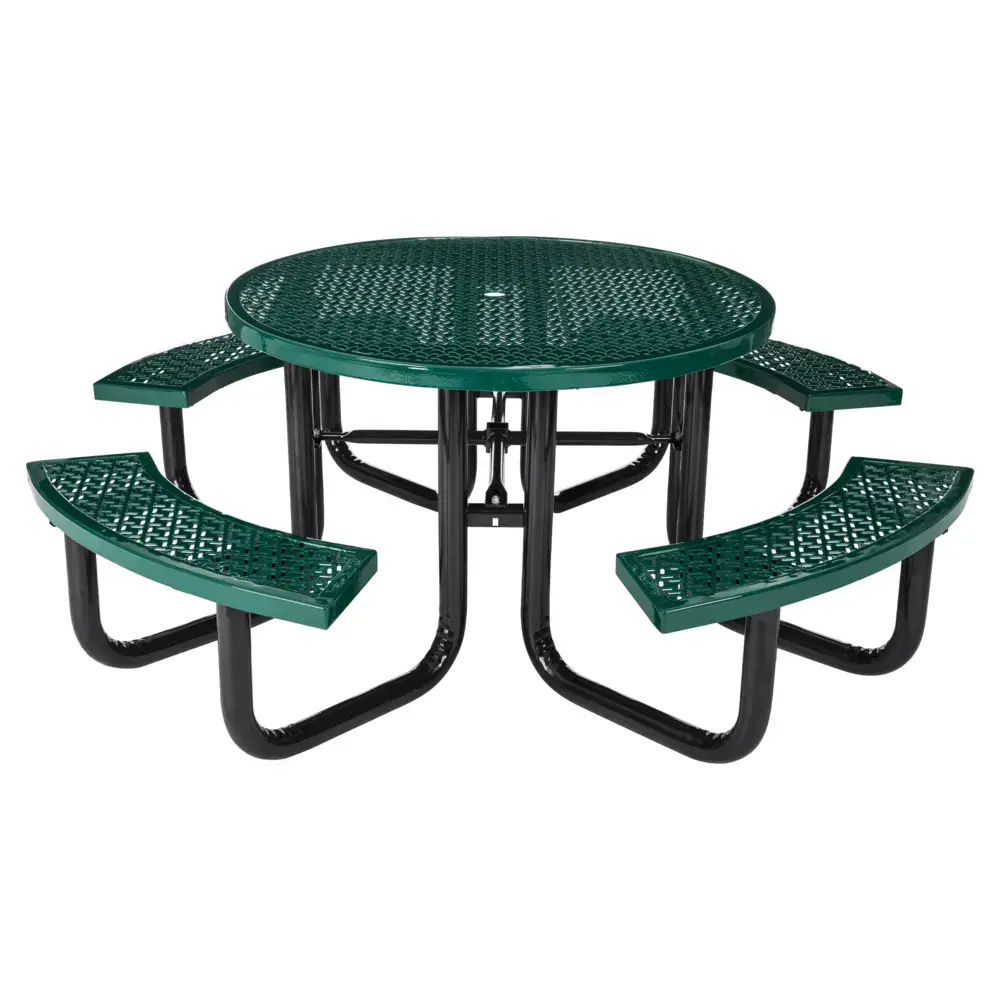
A Single Pedestal Picnic Table is a practical choice for permanent seating areas where managers want a clean layout and fewer frame components around the ground-level space.
Because the table is supported from a central pedestal, the design can make routine cleaning around the table more manageable. It also creates a visually organized appearance for pool decks, restaurant patios, outdoor cafés, courtyards, overlooks, and recreation areas.
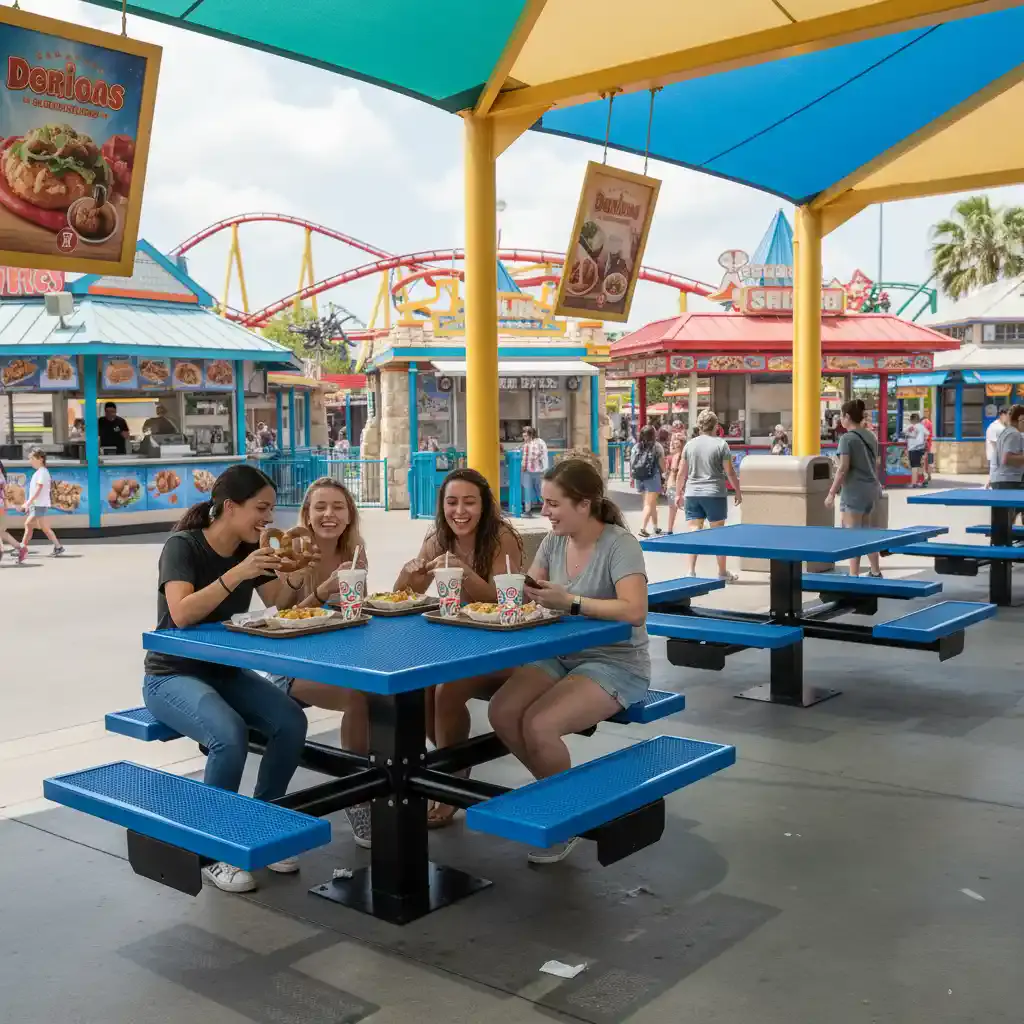
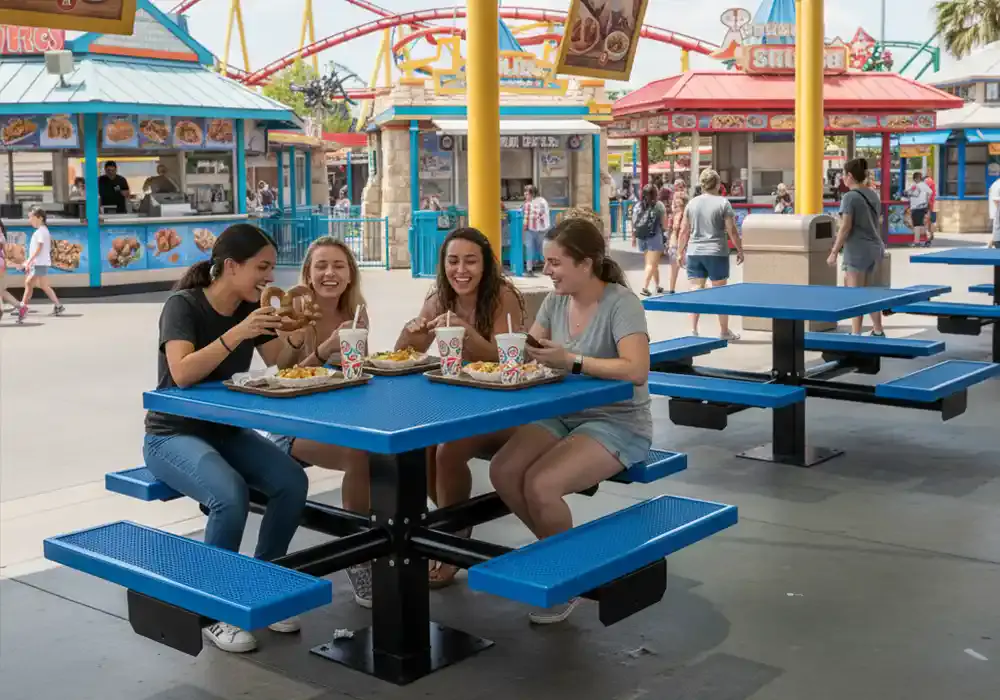
Jamestown Advanced Products offers Single Pedestal Picnic Tables in round and square configurations, giving hospitality managers options for different layouts and guest capacities.
Round tables can encourage conversation and work well as individual gathering points throughout a patio or courtyard. Square tables can align naturally with architectural lines, paved areas, and grid-based outdoor dining layouts.
Best for:
- Hotel and resort pool decks
- Outdoor restaurant patios
- Café seating areas
- Courtyards and terraces
- Permanently arranged recreation spaces
- Areas where grounds maintenance is important
Because this table is intended for a defined location, the site should be evaluated before installation. Confirm surface conditions, drainage, pedestrian clearance, spacing between tables, umbrella placement, and the needs of guests using mobility devices.
When Is a Ribbon Collection Picnic Table the Best Choice?

A Ribbon Collection Picnic Table is best suited to properties where outdoor furnishings contribute to the overall visual identity of the guest environment.
Hotels and resorts often invest heavily in architecture, landscaping, signage, lighting, and interior finishes. Outdoor furniture should feel like part of that same design rather than an unrelated addition. The contemporary lines of the Ribbon Collection can complement modern hospitality properties, mixed-use developments, rooftop spaces, urban hotels, restaurants, and destination resorts.
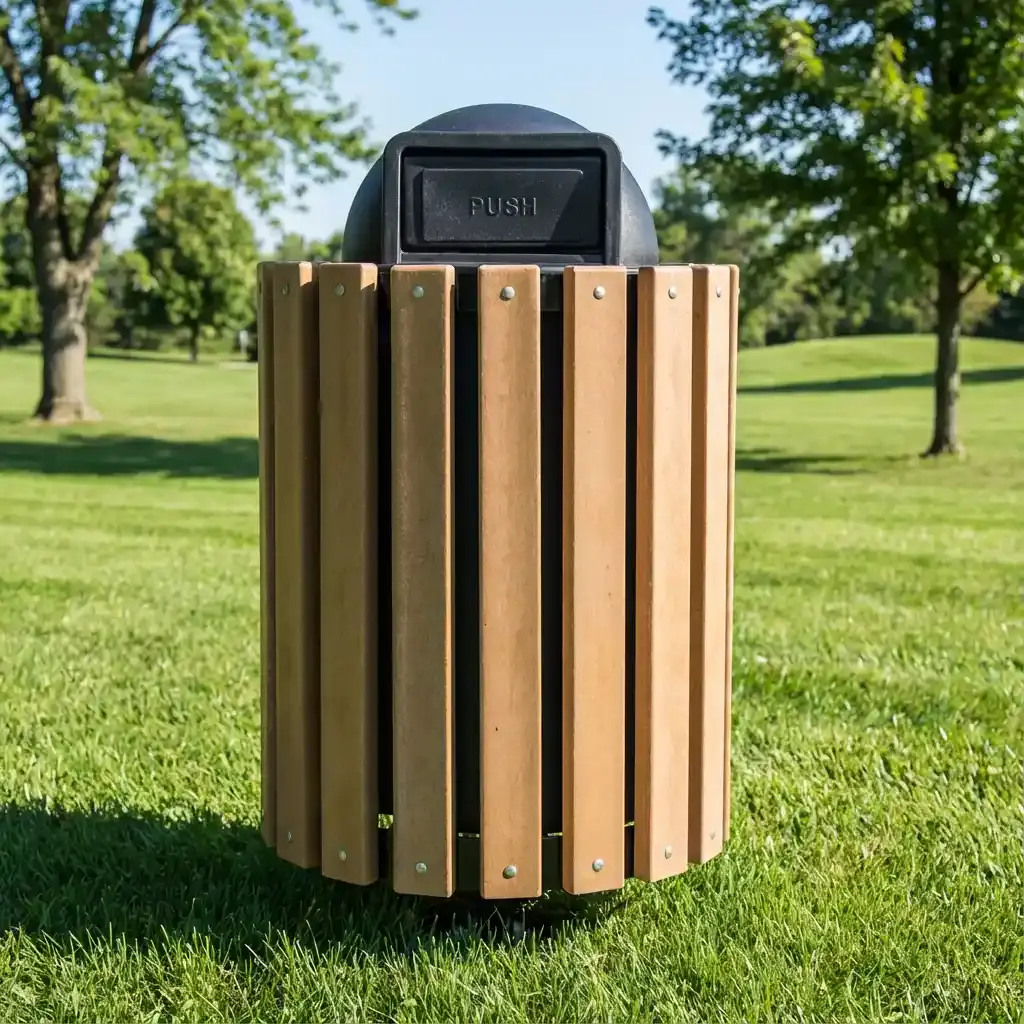
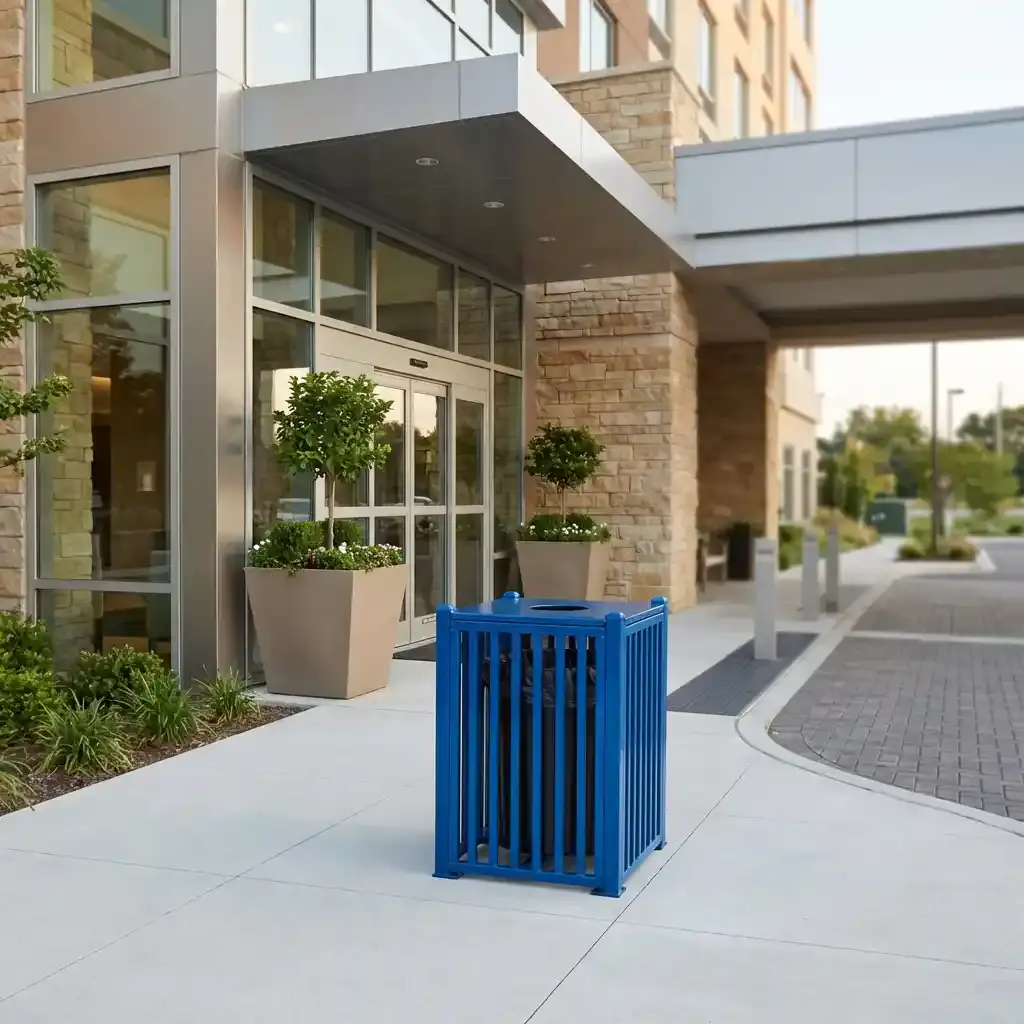
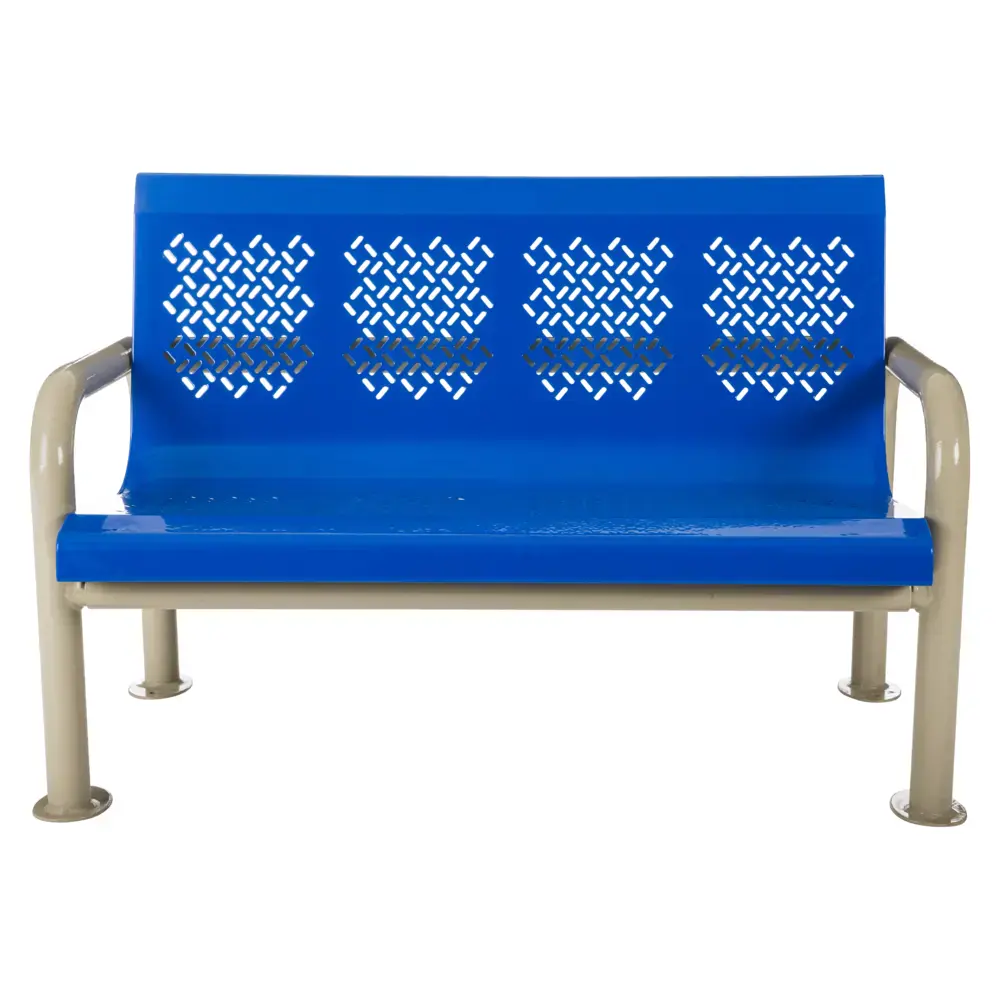
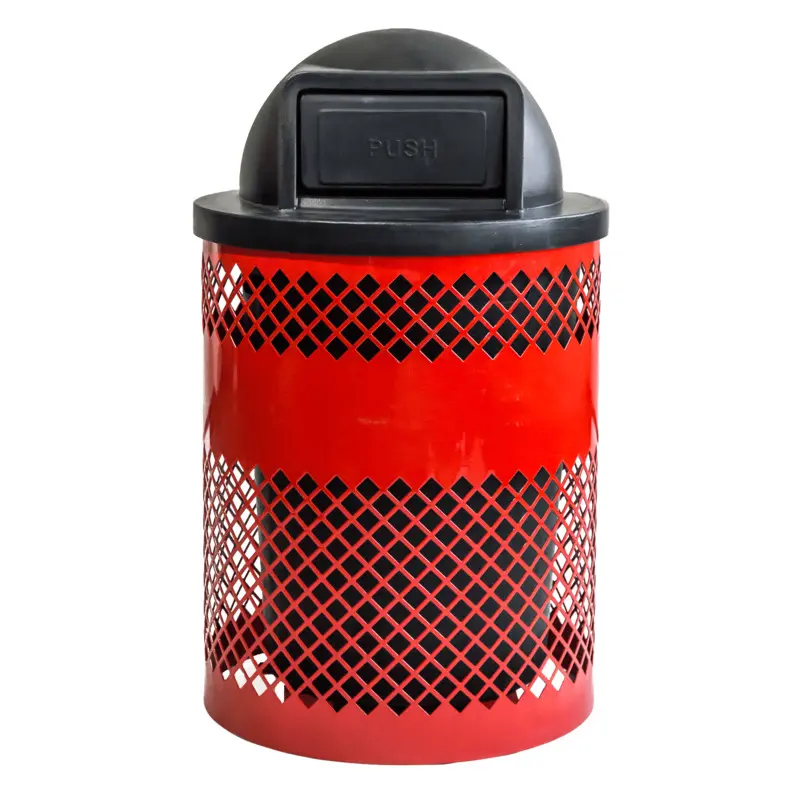
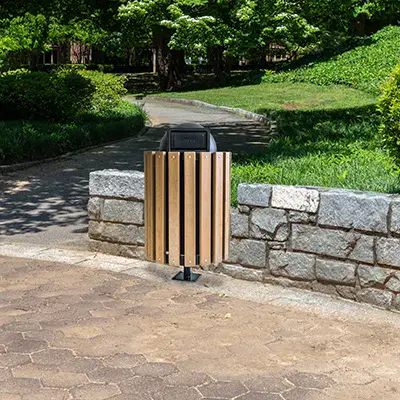
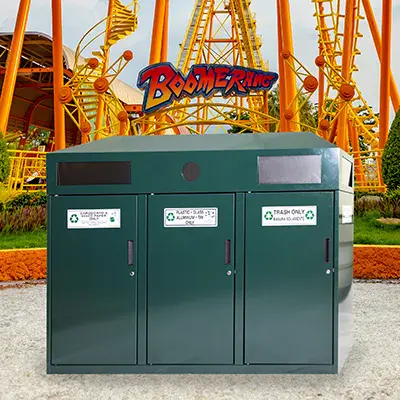
The Ribbon Collection includes coordinated tables, benches, planters, and trash receptacles, allowing managers and designers to create a consistent furnishing package throughout a property.
A coordinated collection can be especially useful in highly visible locations such as:
- Hotel entrances
- Resort courtyards
- Restaurant patios
- Rooftop terraces
- Conference center grounds
- Pedestrian promenades
- Outdoor lounge areas
Custom color selections can help the furnishings blend with architectural materials, landscape plans, exterior branding, or an established property color palette.
Which Picnic Table Is Best for Each Hospitality Space?
Best table for a flexible resort lawn
Choose a Portable Picnic Table.
A portable design allows the property to rearrange seating for everyday guest use, private events, lawn games, outdoor meals, and seasonal programming. Leave sufficient space around each table for maintenance equipment and guest circulation.
Best table for a hotel pool deck
Choose a Single Pedestal Picnic Table.
A pedestal-style table creates a defined permanent gathering area and can simplify cleaning around the base. Position it away from emergency equipment, pool gates, primary circulation paths, and clusters of lounge chairs.
Best table for a modern hotel courtyard
Choose a Ribbon Collection Picnic Table.
The contemporary design is appropriate for visually prominent spaces where tables need to coordinate with surrounding architecture, planters, benches, and waste receptacles.
Best table for an outdoor restaurant or café
Choose a Single Pedestal Picnic Table for a fixed arrangement or a Ribbon Collection Picnic Table when visual coordination is a primary concern.
Consider the desired guest capacity, server routes, cleaning procedures, shade structures, and the distance between the seating area and the restaurant entrance.
Best table for an event venue
Choose a Portable Picnic Table.
Portable tables give staff more flexibility when preparing the property for weddings, conferences, group outings, festivals, and other scheduled events.
Best table for a coordinated resort furnishing plan
Choose the Ribbon Collection Picnic Table and pair it with matching benches, planters, and trash receptacles.
Using coordinated products can make a large property feel more intentional while helping guests visually understand which spaces are designed for gathering, resting, dining, and waste disposal.
Should Hospitality Properties Use Commercial or Residential Picnic Tables?
Commercial picnic tables are generally the better choice for guest-facing hospitality environments.
Hospitality furniture may be used by hundreds or thousands of guests over its service life. It can be exposed to rain, sunlight, snow, pool chemicals, food spills, cleaning products, luggage, event equipment, and repeated movement. The furniture must also maintain a professional appearance because guests often interpret the condition of outdoor spaces as an indicator of how well the overall property is managed.
Commercial tables are designed for shared spaces and repeated use. They can also provide purchasing managers with more appropriate options for installation, finish selection, replacement components, coordinated products, and property-wide planning.
Residential furniture may initially cost less, but managers should also account for:
- Replacement frequency
- Staff time spent moving or repairing furniture
- Cleaning requirements
- Stability under repeated public use
- Availability of matching products
- Long-term appearance
- Suitability for permanent outdoor exposure
The most economical option is not always the table with the lowest initial price. A better calculation considers the expected service life, maintenance requirements, installation cost, and effect on the guest environment.
How Many Picnic Tables Does a Hospitality Property Need?
There is no single table-to-guest ratio that works for every property. The correct number depends on the size of the space, expected occupancy, food-service needs, event schedules, and the length of time guests typically remain in the area.
Begin by identifying the number of guests who may use the space during its busiest normal period. Then determine how many tables can be installed without overcrowding the area.
Hospitality managers should allow room for:
- Guests entering and leaving seats
- Wheelchair maneuvering and accessible routes
- Servers and housekeeping carts
- Strollers and luggage
- Landscape maintenance
- Waste and recycling stations
- Umbrellas or shade structures
- Emergency and service access
- Natural movement between buildings and amenities
In many cases, several properly positioned tables create a better guest experience than fitting the maximum possible number into the available space.
What Table Materials and Finishes Work Best for Hospitality Settings?
The right material depends on the desired appearance, climate, maintenance program, and amount of use.
Commercial steel frames provide structural support for public-use furniture. Depending on the table model, hospitality managers may also consider seating and tabletop options such as coated metal surfaces or recycled plastic lumber.
Important considerations include:
Climate exposure
Properties in coastal, snowy, humid, or high-sun environments should evaluate finishes based on local conditions. Furniture placed under a covered patio may experience different exposure than tables installed beside a pool or directly on an open lawn.
Cleaning requirements
Food-service and pool areas may require frequent cleaning. Select surfaces that staff can access easily and incorporate the product into documented housekeeping procedures.
Guest comfort
Consider how the tabletop and seats will perform in direct sunlight, shade, cold temperatures, and wet conditions. Shade structures, landscaping, and table placement can have as much effect on guest comfort as the table material itself.
Property design
Choose colors and materials that complement the building exterior, paving, fencing, lighting, landscape plan, and existing outdoor furniture.
Jamestown Advanced Products manufactures American-made commercial outdoor furnishings in Jamestown, New York, with options that include custom colors, materials, and other product configurations.
How Can Picnic Tables Support an Accessible Guest Experience?
Accessibility should be addressed as part of the overall site plan, not only through the purchase of an individual table.
Hospitality managers should consider whether guests can reach the table from a parking area, building entrance, guest room, restaurant, pool, or other amenity using a firm and usable route. The area surrounding the table should provide appropriate space for approach, seating, and maneuvering.
Important questions include:
- Is the table connected to an accessible walking route?
- Is the surface firm, stable, and reasonably level?
- Is there sufficient clear space beside or at the end of the table?
- Does the seating area remain usable when other guests are seated?
- Are planters, trash receptacles, signs, or umbrellas creating obstacles?
- Can staff maintain the required clear space during events?
Portable, Single Pedestal, and Ribbon Collection tables can be part of a broader hospitality furnishing plan, but properties should also consider dedicated ADA-accessible or Universal Access Picnic Table options where appropriate.
Accessibility requirements can vary by project and jurisdiction. Hospitality managers should review the final site plan with the property’s architect, accessibility consultant, contractor, or other qualified professional.
Can Outdoor Picnic Tables Be Customized to Match a Hotel or Resort?
Commercial tables can be incorporated into a property’s visual identity through finish selection, coordinated collections, and available customization options.
A resort might select a finish that complements its exterior siding or landscape architecture. A hotel may coordinate tables with branded planters and trash receptacles. A restaurant may use a custom color to extend its indoor design onto the patio.
Depending on the selected product, customization may include:
- Custom powder-coat colors
- Coordinating tabletop and seat materials
- Custom logos
- Matching benches and trash receptacles
- Coordinated planters
- Different sizes or configurations
- Surface-mount or other installation options
Customization should remain functional. A color may look attractive in a rendering but perform differently in direct sunlight or against the surrounding paving. Review physical color samples and product specifications before approving a property-wide order.
What Should Hospitality Managers Consider Before Ordering Picnic Tables?
- Identify the purpose of each space
Determine whether guests will use the area for dining, short breaks, group activities, remote work, events, or general recreation.
- Observe existing guest traffic
Watch how guests currently move through the area. Avoid placing tables where people naturally cut between a building entrance, parking lot, pool, restaurant, elevator, or recreational amenity.
- Measure more than the table footprint
Include seats, guest movement, wheelchair clearances, server paths, and maintenance access in the layout.
- Decide whether the layout should be permanent
Use portable tables where arrangements change. Use secured pedestal or collection-style tables where the seating plan should remain consistent.
- Review installation conditions
Confirm the type and condition of the surface. Soil, concrete, pavers, decking, and rooftop surfaces may require different planning.
- Coordinate the full furnishing package
Tables look more intentional when they complement nearby benches, planters, bike racks, trash receptacles, and architectural features.
- Plan for maintenance
Establish who will clean, inspect, tighten, relocate, or repair the tables. Include the products in routine property inspections.
- Consider accessibility early
Accessible routes and clear floor space are much easier to address during planning than after furniture and landscaping have been installed.
- Request product documentation
Review dimensions, material options, installation guidance, care information, and assembly instructions before placing an order.
- Think beyond the initial purchase
Evaluate durability, replacement needs, guest experience, maintenance labor, and how the furnishings will look across multiple seasons.
What Common Picnic Table Purchasing Mistakes Should Hospitality Managers Avoid?
Choosing residential furniture for a commercial environment
Furniture designed for limited household use may not be appropriate for repeated use by hotel, resort, or restaurant guests.
Blocking the primary walking route
A table should create a destination without becoming an obstacle. Maintain clear paths between entrances, parking areas, guest rooms, restaurants, pools, and other amenities.
Selecting every table based only on appearance
Design matters, but stability, maintenance, capacity, installation, and guest comfort should also guide the decision.
Using one table style everywhere
A large hospitality property may need portable tables on a lawn, pedestal tables on a pool deck, and contemporary coordinated tables near the main entrance.
Overcrowding the seating area
Too many tables can make a courtyard or patio feel cramped and may interfere with accessibility, housekeeping, and food-service operations.
Ignoring the surrounding furnishings
A table should work with the property’s benches, planters, trash receptacles, lighting, paving, and landscape design.
Failing to plan for shade
A well-built table may still go unused when it is positioned in intense direct sunlight. Consider trees, umbrellas, canopies, and building orientation.
Forgetting maintenance access
Grounds and housekeeping teams need room to clean beneath the table, service nearby landscaping, remove snow, and move equipment through the area.
Treating accessibility as an add-on
The table, route, surface, spacing, and surrounding objects all affect whether the seating area can be used comfortably.
Frequently Asked Questions About Hospitality Picnic Tables
What is the best picnic table for a hotel or resort?
The best picnic table depends on the location. Portable Picnic Tables are useful for flexible lawns and event spaces, Single Pedestal Picnic Tables work well in permanent gathering areas, and Ribbon Collection Picnic Tables are suited to design-focused courtyards and entrances.
Are portable picnic tables suitable for hospitality properties?
Yes. Commercial portable picnic tables are useful in event spaces, resort lawns, recreation areas, and seasonal dining locations where staff may need to rearrange the layout.
What type of picnic table is best for a pool area?
A Single Pedestal Picnic Table can be a good choice for a permanent pool-deck seating area because it creates an organized layout and allows access around the base. Placement should preserve walking routes, emergency access, and clearance around pool gates.
What outdoor table is best for a modern hotel?
A Ribbon Collection Picnic Table is well suited to modern hotels, resorts, rooftops, courtyards, and restaurant patios. It can be coordinated with matching benches, planters, and trash receptacles.
Can hospitality picnic tables be customized?
Customization options may include custom colors, materials, sizes, and coordinated furnishings. Available options depend on the selected table model and project requirements.

Should picnic tables be anchored?
Tables intended for permanent layouts may benefit from an appropriate mounting method. Portable models are designed for flexibility. Installation decisions should account for the surface, property operations, wind exposure, security, and manufacturer guidance.
How far apart should outdoor picnic tables be placed?
Spacing should allow guests to enter and leave the seats comfortably while preserving accessible routes, staff pathways, and maintenance access. The final distance will depend on table dimensions, local requirements, and the intended use of the space.
Do hospitality properties need accessible picnic tables?
Hospitality properties should provide inclusive outdoor gathering spaces and comply with applicable accessibility requirements. Managers should consider accessible table models as well as routes, surfaces, maneuvering space, and surrounding furniture placement.
Create Better Outdoor Gathering Spaces With Jamestown Advanced Products
The right picnic tables can make a hotel, resort, restaurant, campground, or event property more comfortable and useful for guests. The key is to choose commercial outdoor tables based on how each space functions rather than using the same product in every location.
Jamestown Advanced Products manufactures durable, American-made outdoor furnishings in Jamestown, New York. With in-house production, custom color and logo opportunities, and coordinated product collections, hospitality managers can create outdoor areas that support guest comfort while complementing the appearance of the property.
Explore Portable Picnic Tables, Single Pedestal Picnic Tables, Ribbon Collection Picnic Tables, and additional commercial outdoor furnishings from Jamestown Advanced Products, or contact the team to discuss the needs of your next hospitality project.

