









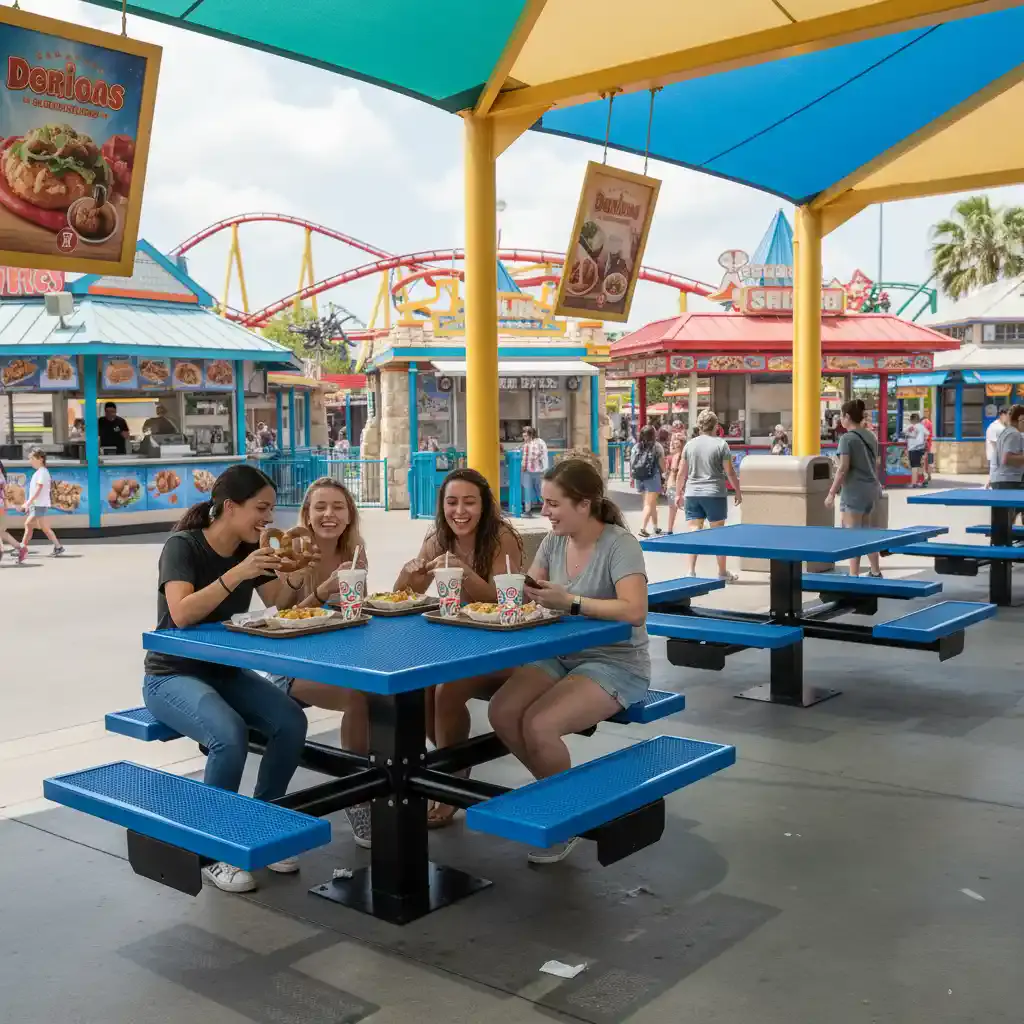
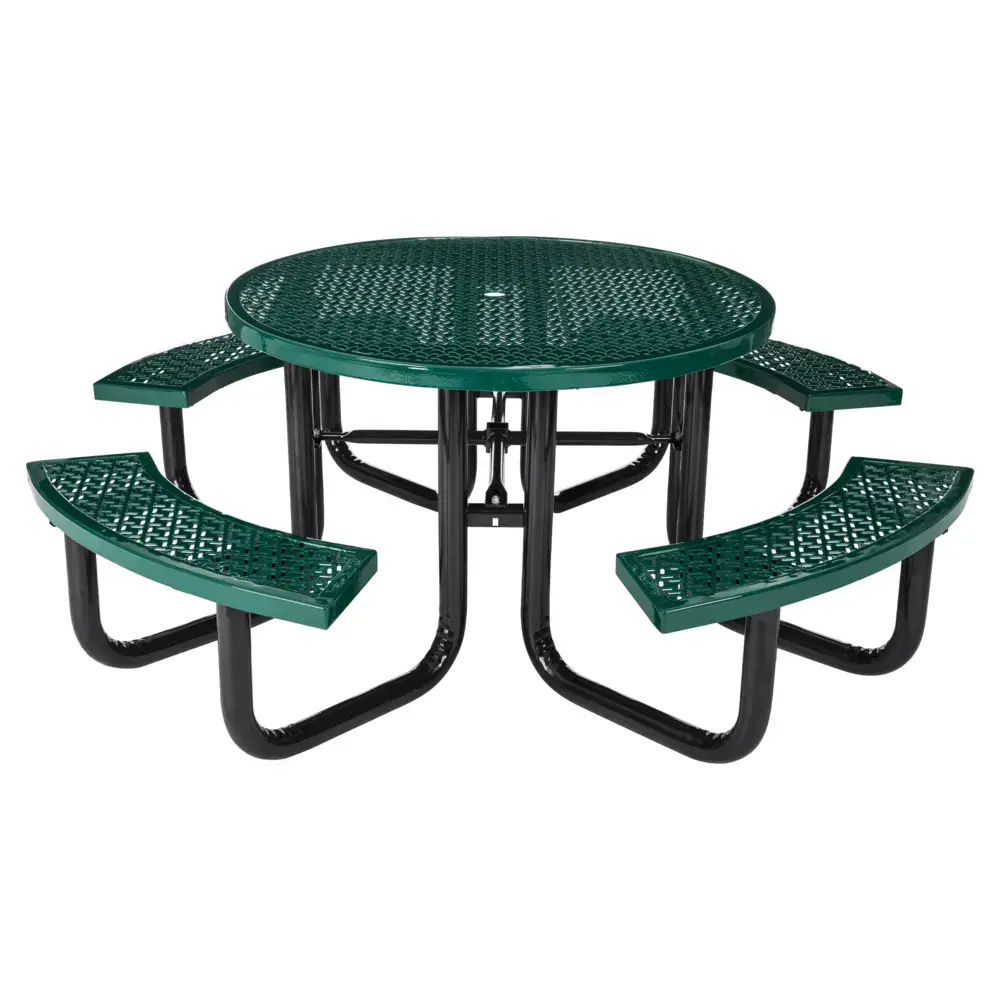
What Are the Best Picnic Tables for a Theme Park?

Quick answer: The best picnic tables for a theme park are commercial-grade tables selected for the specific demands of each guest area. Heavy-duty tables work well in high-traffic dining zones, ADA-accessible tables support inclusive seating, portable tables provide layout flexibility, and single-pedestal tables help maintain an orderly appearance in permanent seating areas. The right table mix will depend on traffic volume, accessibility requirements, maintenance needs, placement, and the type of guest experience each area is designed to provide.
Why Does Picnic Table Selection Matter at a Theme Park?
Picnic tables may seem like a straightforward site furnishing, but they directly affect guest comfort, traffic flow, accessibility, maintenance, and the overall appearance of a theme park.
Unlike residential furniture, theme park tables must withstand frequent use, changing weather conditions, food and beverage service, routine cleaning, and daily exposure to large numbers of guests. Tables also need to fit naturally into different environments, including food courts, ride areas, shaded rest zones, water park spaces, event areas, and landscaped promenades.
Choosing the correct table for each location can help a theme park:
- Provide comfortable places for guests to eat and rest
- Accommodate visitors with mobility devices
- Keep pedestrian routes and service areas clear
- Reduce unnecessary furniture movement
- Simplify cleaning and grounds maintenance
- Maintain a coordinated visual identity
- Support long-term outdoor use
For most theme parks, the best solution is not one table used throughout the entire property. A combination of table styles typically provides better performance.
What Should Theme Park Managers Look for in a Picnic Table?
Theme park managers should prioritize commercial construction, accessibility, guest capacity, placement requirements, maintenance needs, and visual consistency.
Commercial-Grade Durability
Tables in a theme park may be used by hundreds of guests each week. They should be manufactured for commercial outdoor environments rather than residential patios or occasional backyard use.
A durable table can help withstand:
- Frequent guest turnover
- Exposure to rain, sun, and seasonal weather
- Repeated cleaning
- Food and drink spills
- Movement by maintenance personnel
- Normal wear in busy public spaces
Accessibility
Accessible seating should be incorporated into the overall site plan rather than treated as an afterthought. ADA-accessible picnic tables can provide extended tabletop space and appropriate seating access for guests using wheelchairs or other mobility devices.
The table must also be installed on an accessible surface and connected to an accessible route. Adequate clear space around the table is just as important as the table design itself.
Placement and Traffic Flow
A table should not block queue entrances, emergency routes, ride exits, food service lines, stroller parking, or primary pedestrian paths.
Managers should consider how guests approach the table, where chairs or mobility devices will be positioned, and whether maintenance crews can clean the surrounding area efficiently.
Maintenance Requirements
Tables placed in high-volume dining areas should be easy to clean and inspect. Managers should also consider how the table design affects mowing, pressure washing, sweeping, snow removal, and surface maintenance.
Appearance and Customization
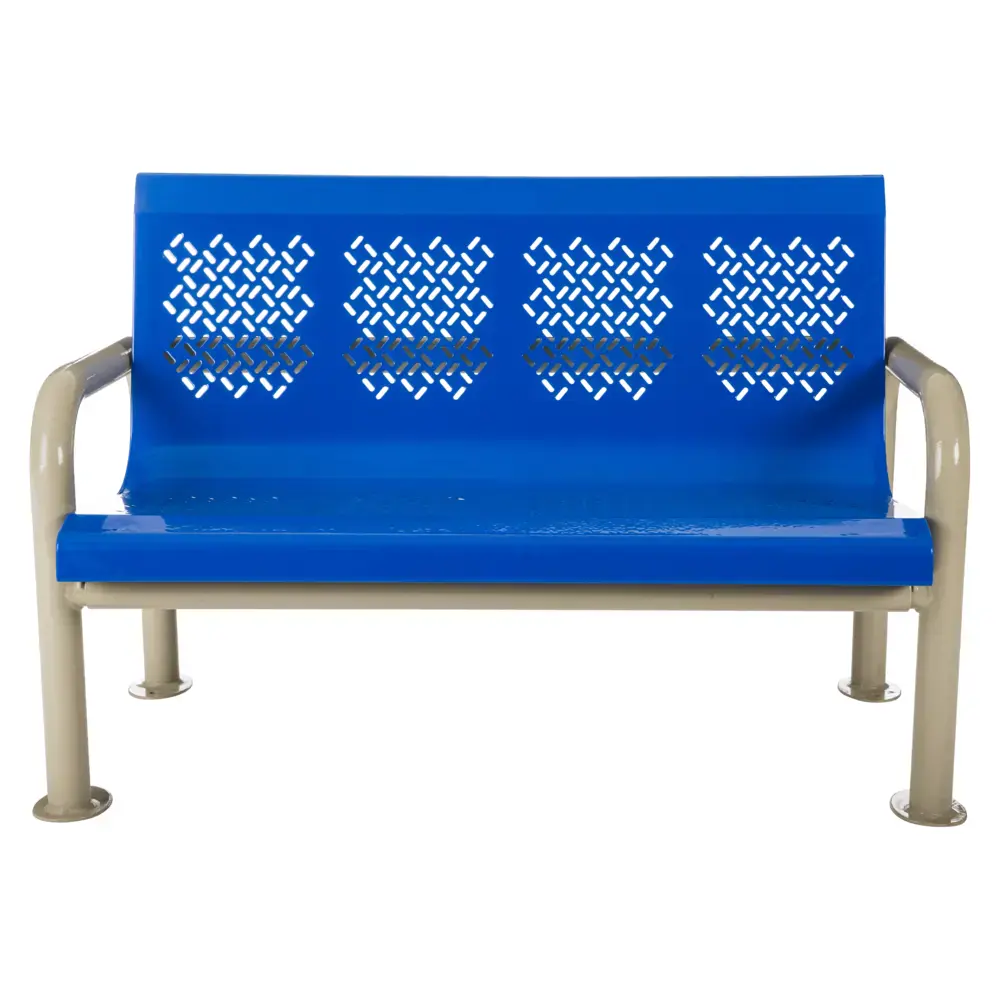
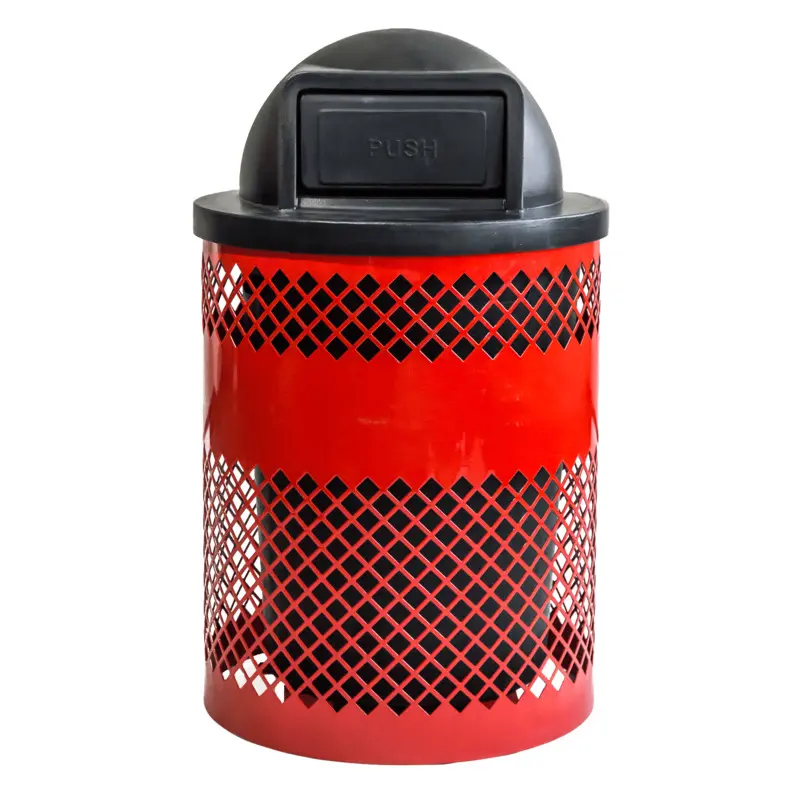
Picnic tables contribute to the overall look of a park. Coordinated colors can help tables blend with nearby benches, planters, trash receptacles, buildings, and themed environments.
Custom colors and logos can also reinforce a park's visual identity or help distinguish different dining and activity zones.
Which Picnic Tables Are Best for Theme Parks?
The best table depends on where it will be installed and how the space is expected to function.
| Picnic Table | Best For | Primary Advantage | Placement Considerations |
|---|---|---|---|
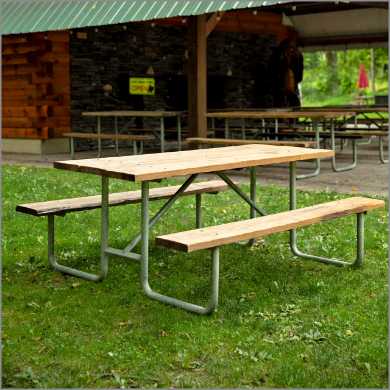
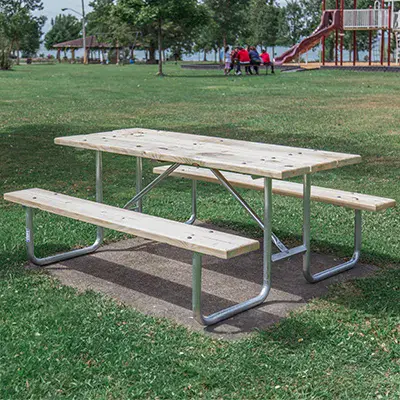
| Heavy Duty Picnic Table | Busy food courts, ride areas, group dining spaces, high-traffic guest zones | Durable construction for frequent commercial use | Allow sufficient circulation around all seating sides |
| ADA Accessible Picnic Table | Accessible dining areas, rest zones, picnic spaces, attraction areas | Provides inclusive seating access | Install on a firm, stable surface connected to an accessible route |
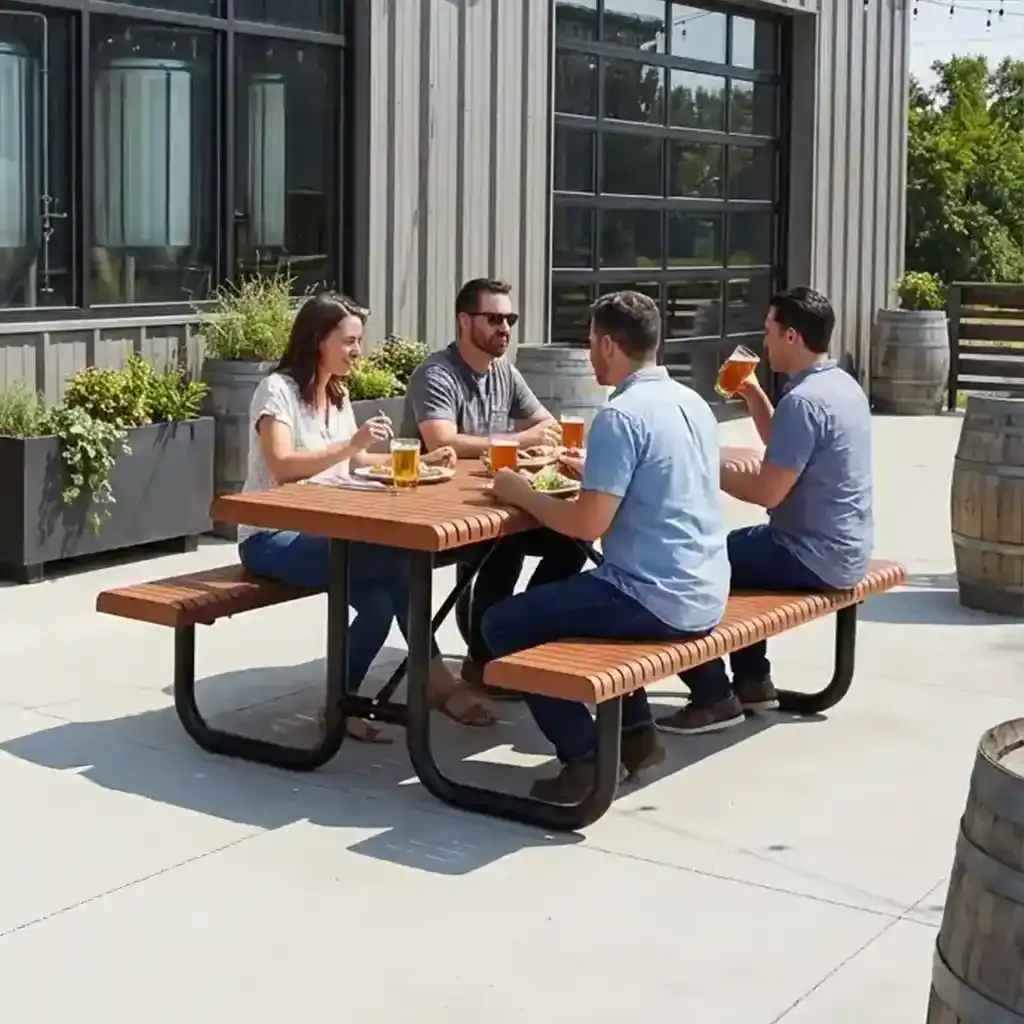
| Portable Picnic Table | Event spaces, seasonal dining, flexible seating areas, overflow zones | Can be repositioned as operational needs change | Avoid placing it where guests or staff may move it into a circulation route |
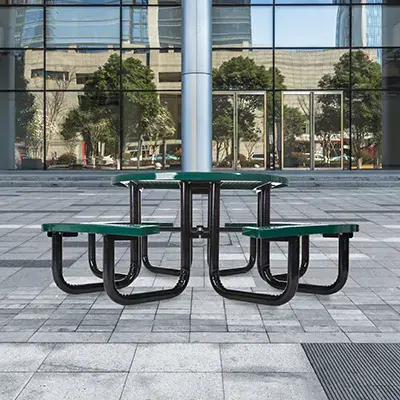
| Single Pedestal Picnic Table | Permanent courtyards, paved dining areas, water parks, controlled seating zones | Creates an organized layout and simplifies access around the base | Requires thoughtful permanent placement and suitable mounting conditions |
When Is a Heavy Duty Picnic Table the Best Choice?
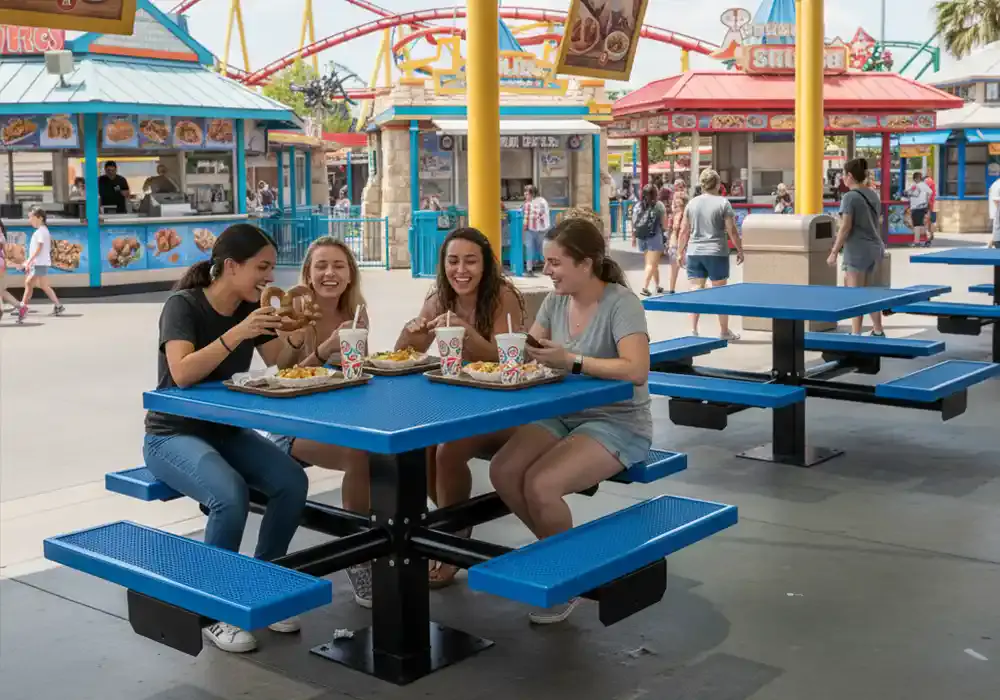
A Heavy Duty Picnic Table is a strong choice for areas with consistent guest traffic and frequent turnover.
Potential locations include:
- Outdoor food courts
- Picnic shelters
- Midway dining areas
- Group rental spaces
- Family rest areas
- High-volume concession zones
- Areas near popular attractions
Heavy-duty tables are particularly useful where furniture must remain stable and dependable through repeated daily use. Their commercial construction makes them better suited to demanding public environments than lightweight residential furniture.
Theme park managers should still evaluate table placement carefully. Even a durable table can create operational problems when installed too close to a walkway, queue, trash receptacle, condiment station, or food service line.
Best for: High-traffic areas where durability and dependable long-term use are the primary concerns.
Why Should Theme Parks Include ADA Accessible Picnic Tables?
 An ADA Accessible Picnic Table helps create a more inclusive guest environment by providing usable table space for visitors with mobility devices.
Accessible tables may be appropriate near:
- Food and beverage areas
- Family picnic zones
- Ride exit rest areas
- Water park dining spaces
- Campground or resort areas
- Event pavilions
- Accessible playgrounds
- Guest service areas
Simply purchasing an accessible table does not automatically make the surrounding area accessible. The table should be installed on a firm, stable surface with an accessible route leading to it. Managers must also preserve the necessary clear floor space and avoid placing trash receptacles, planters, signs, or other furnishings in the access area.
Accessible tables should be distributed throughout the park so guests have comparable seating choices rather than being limited to one isolated section.
Best for: Any guest seating area where inclusive access and convenient wheelchair positioning are required.
When Does a Portable Picnic Table Make Sense?
 A Portable Picnic Table is useful when a theme park needs flexibility.
It can be repositioned for:
- Seasonal events
- Temporary food service areas
- Festivals
- Private rentals
- Group gatherings
- Overflow dining
- Special attraction openings
- Changing crowd patterns
Portable tables can help operations teams respond to changing attendance levels or reconfigure a space for different uses. They can also be moved when cleaning, resurfacing, landscaping, or event setup is required.
However, portability should not come at the expense of organization. Tables should remain in approved seating zones and should not be moved into emergency access routes, queue entrances, or crowded pedestrian corridors.
Managers may also need a plan for securing or storing tables during severe weather, seasonal closures, or periods when the area is not in use.
Best for: Flexible spaces that regularly change layouts or support temporary events.
Where Should a Single Pedestal Picnic Table Be Used?
 A Single Pedestal Picnic Table is well suited to permanent, organized seating areas where managers want to reduce the number of table legs and supports near the ground.
Potential applications include:
- Paved food courts
- Courtyards
- Water park dining areas
- Resort areas
- Attraction plazas
- Permanent concession seating
- Landscaped rest zones
The central pedestal can create a cleaner appearance and may make it easier to sweep or maintain the area beneath and around the table. A permanently mounted table can also help maintain consistent spacing and prevent furniture from gradually shifting into walkways.
Because the location is less flexible, site planning is important. Managers should confirm table spacing, pedestrian flow, accessibility, utility locations, drainage, and mounting conditions before installation.
Best for: Permanent paved areas where an orderly layout and controlled furniture placement are priorities.
What Is the Best Picnic Table for Each Theme Park Area?
Different areas of a theme park place different demands on outdoor furniture.
Best Picnic Table for a Busy Food Court
 A Heavy Duty Picnic Table is often the best option for a busy food court because it is designed for frequent use and repeated cleaning.
ADA Accessible Picnic Tables should also be integrated throughout the dining area to provide comparable seating opportunities.
Best Picnic Table for a Permanent Courtyard
A Single Pedestal Picnic Table can help create a consistent and organized seating layout in a courtyard or paved plaza.
Its fixed placement can prevent tables from shifting into circulation routes and may simplify cleaning around the table base.
Best Picnic Table for Seasonal Events
A Portable Picnic Table provides the flexibility needed for festivals, temporary dining zones, special events, and changing crowd levels.
The park should establish designated placement and storage procedures so portable furniture does not interfere with operations.
Best Picnic Table for Accessible Guest Seating
An ADA Accessible Picnic Table is the appropriate choice when wheelchair access and inclusive seating are priorities.
The surrounding surface, route, and clear space must also be considered during site planning.
Best Picnic Table for High-Traffic Ride Areas
A Heavy Duty Picnic Table can provide a reliable resting and dining location near popular attractions, provided it is positioned outside the ride exit and primary guest circulation route.
Best Picnic Table for Water Park Areas
Single Pedestal and ADA Accessible Picnic Tables may both work well in water park environments, depending on mounting requirements, surface conditions, guest flow, and maintenance procedures.
Managers should select finishes and materials appropriate for the site's moisture exposure and cleaning routines.
Should Every Picnic Table in a Theme Park Be the Same?
Using one table style throughout the entire property can create visual consistency, but it may not provide the best operational performance.
A mixed-table strategy allows managers to use:
- Heavy-duty tables in the busiest locations
- Accessible tables throughout dining and rest areas
- Portable tables in flexible event spaces
- Single-pedestal tables in permanent paved zones
Consistency can still be maintained through coordinated colors, finishes, materials, and custom branding. This allows the park to select the most practical product for each application without creating a mismatched appearance.
How Many ADA Accessible Picnic Tables Does a Theme Park Need?
The appropriate number of accessible tables depends on the layout, applicable accessibility requirements, total seating capacity, and the types of guest areas throughout the park.
Accessible tables should not be confined to a single remote area. They should be integrated into dining, picnic, rest, and attraction zones so guests can sit with their families and groups.
Theme park managers should review current federal, state, and local accessibility requirements and work with qualified site planners when determining quantities, spacing, surfaces, and routes.
How Can Picnic Tables Support a Theme Park's Branding?
Picnic tables can reinforce the appearance and identity of a theme park when their colors and design details coordinate with the surrounding environment.
Customization options may include:
- Powder coat colors
- Coordinated frame and tabletop combinations
- Custom logos
- Park names
- Attraction branding
- Area-specific color schemes
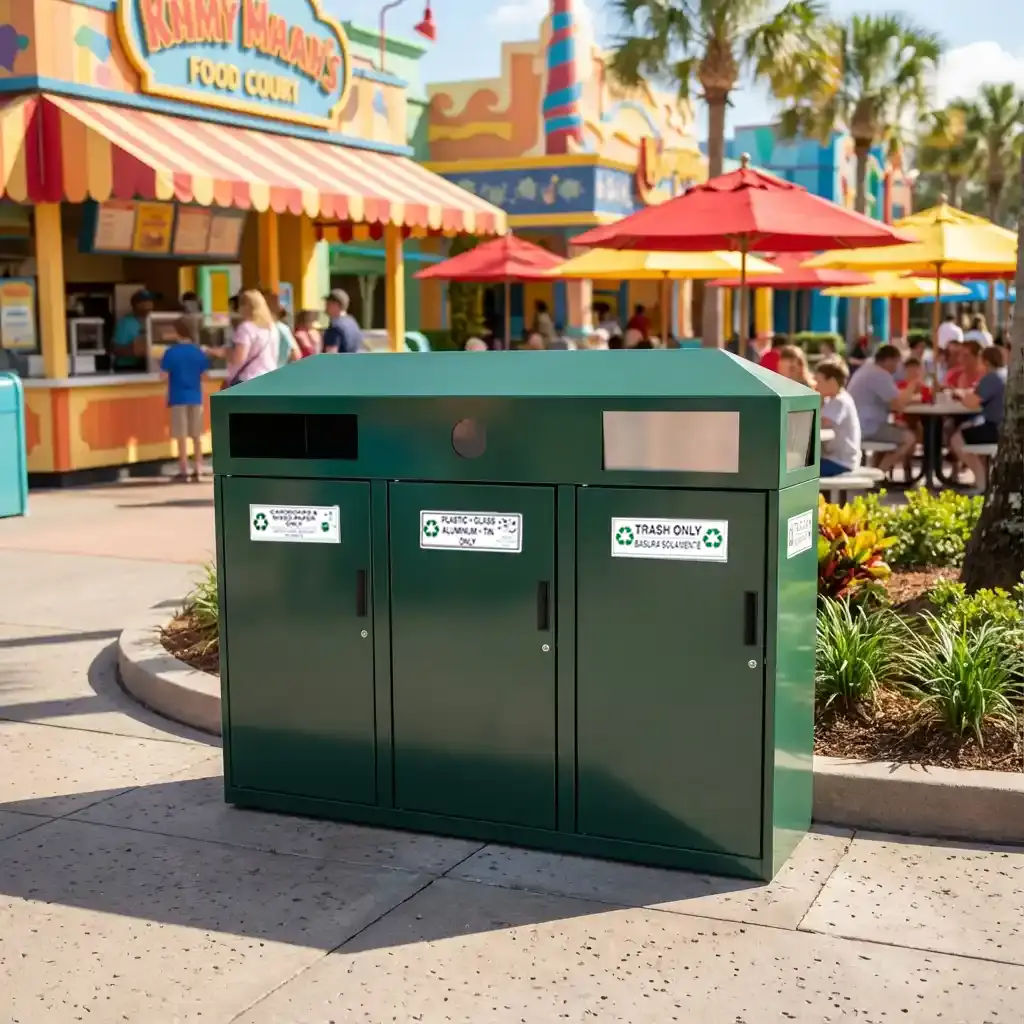
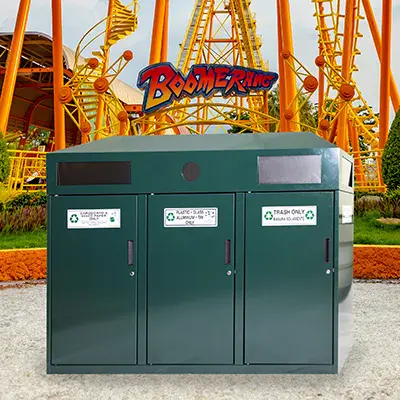
- Matching benches and trash receptacles
Custom branding may be especially useful in entrance areas, premium dining zones, resort properties, water parks, and sponsored spaces.
Branding should remain practical. Logos and decorative elements should not create surfaces that are difficult to clean or details that interfere with guest comfort.
What Practical Factors Should Be Considered Before Ordering?
Before selecting picnic tables, theme park managers should review the site rather than choosing products based only on appearance or purchase price.
Measure the Available Space
Confirm the table footprint and include additional room for:
- Seated guests
- Wheelchairs and mobility devices
- Strollers
- Guest circulation
- Maintenance equipment
- Nearby trash receptacles
- Food service lines
- Landscaping
Review the Surface
Determine whether the table will be placed on:
- Concrete
- Asphalt
- Pavers
- Compacted aggregate
- A firm, stable accessible pad
- Grass
- A covered pavilion surface
The surface may influence the table style, mounting method, accessibility, drainage, and maintenance process.
Evaluate Crowd Movement
Observe how guests naturally move through the area. A table should not be placed where seated visitors will extend into a primary walking route.
Pay particular attention to locations near:
- Ride exits
- Queue entrances
- Restrooms
- Food pickup windows
- Stroller parking
- Tram stops
- Emergency routes
Plan for Cleaning
Consider whether employees can easily sweep, wash, inspect, and sanitize the table and surrounding surface.
Permanent tables may help preserve spacing, while portable tables may make deep cleaning easier. The best choice depends on the park's maintenance procedures.
Coordinate Site Furnishings
Picnic tables should work with nearby:
- Benches
- Trash receptacles
- Planters
- Shade structures
- Umbrellas
- Railings
- Signs
- Architectural finishes
A coordinated furnishing package can create a more intentional guest environment.
Consider Future Needs
Theme park attendance patterns and operating requirements can change. Managers should consider possible expansion, seasonal events, new concessions, and future accessibility improvements before finalizing a layout.
What Common Picnic Table Purchasing Mistakes Should Theme Parks Avoid?
Choosing Residential Tables for Commercial Areas
Residential tables are generally not designed for the traffic, cleaning, weather exposure, and repeated use found in a theme park.
Commercial outdoor products typically provide a more appropriate long-term solution.
Ignoring the Space Around the Table
A table may technically fit within a space while still creating congestion once guests are seated. Managers should evaluate the full occupied footprint, not just the table dimensions.
Treating Accessibility as a Separate Seating Zone
Placing all accessible tables in one isolated location can limit guest choice. Accessible seating should be incorporated throughout comparable guest areas.
Blocking Primary Walking Routes
Tables placed too close to ride exits, queues, concession lines, or walkways can create bottlenecks and safety concerns.
Selecting Every Table for the Same Purpose
A portable table, heavy-duty table, accessible table, and single-pedestal table each solve different operational problems. Using one model everywhere may create unnecessary limitations.
Focusing Only on Initial Cost
Purchase price is important, but managers should also evaluate durability, maintenance, replacement frequency, installation, customization, and long-term use.
Overlooking Maintenance Access
Poorly positioned tables can make mowing, sweeping, pressure washing, snow removal, and surface repairs more difficult.
Installing Fixed Tables Without Confirming the Layout
Permanent mounting should occur only after pedestrian flow, table spacing, drainage, accessibility, utilities, and service access have been reviewed.
Why Choose American-Made Picnic Tables?
American-made picnic tables can provide theme park buyers with greater visibility into manufacturing, customization, quality control, and product support.
Jamestown Advanced Products manufactures durable commercial outdoor products in Jamestown, New York. In-house production allows the company to oversee key stages of the manufacturing process and offer options suited to commercial parks, attractions, municipalities, campgrounds, and hospitality properties.
For theme park projects, available options may include custom colors, logos, accessible configurations, mounting choices, and coordinated site furnishings.
Buyers should discuss the intended application, installation surface, traffic level, accessibility goals, and desired customization before placing an order.
Frequently Asked Questions About Theme Park Picnic Tables
What is the best picnic table for a theme park?
The best picnic table depends on the location. Heavy-duty tables are well suited to high-traffic areas, ADA-accessible tables provide inclusive seating, portable tables support changing layouts, and single-pedestal tables work well in permanent paved spaces.
Are commercial picnic tables better for theme parks?
Commercial picnic tables are generally more appropriate for theme parks because they are designed for frequent use, outdoor exposure, routine cleaning, and demanding public environments.
Where should ADA-accessible picnic tables be installed?
ADA-accessible picnic tables should be distributed throughout comparable dining, picnic, and rest areas. They should be installed on a firm, stable surface connected to an accessible route with appropriate clear space.
Should theme park picnic tables be portable or permanently mounted?
Portable tables are helpful in seasonal and multipurpose areas. Permanently mounted tables are useful where managers want consistent placement, controlled spacing, and a more orderly layout. Many parks benefit from using both.
Can theme park picnic tables be customized?
Depending on the product, picnic tables may be available with custom colors, finishes, and other options that coordinate with the surrounding site furnishings.
How should picnic tables be positioned near rides?
Tables should be located outside ride exits, queue entrances, emergency access routes, and primary pedestrian paths. Managers should provide enough space for seated guests without creating a bottleneck.
What type of picnic table is easiest to maintain?
Maintenance needs depend on the surface and location. Single-pedestal tables can provide more open space around the base, while portable tables can be moved for cleaning. Heavy-duty commercial construction is beneficial in areas that require frequent cleaning.
Find the Right Picnic Tables for Your Theme Park
The best theme park seating plan often combines several table styles rather than relying on one product throughout the property. Heavy Duty Picnic Tables can serve high-traffic areas, ADA Accessible Picnic Tables can support inclusive guest seating, Portable Picnic Tables can provide flexibility, and Single Pedestal Picnic Tables can create organized permanent dining zones.
Jamestown Advanced Products manufactures American-made commercial outdoor products in Jamestown, New York. With in-house production, custom colors, logo options, accessible products, and site furnishings built for demanding outdoor environments, Jamestown Advanced Products can help theme park managers select tables that fit their operational and guest experience goals.

