









What Are the Best Types of Benches for Parks and Municipal Spaces?

Quick answer: The best type of bench depends on where it will be installed, how visitors will use it, the appearance of the surrounding space, and the level of maintenance your municipality can support. Economy Benches work well for practical seating, Hoop Benches complement parks and streetscapes, Perforated Benches offer a polished appearance with custom-logo options, Chautauqua Contour Benches provide premium seating, and Player’s Benches are designed for athletic facilities.
Municipal benches may seem like a straightforward purchase, but the wrong design can create maintenance problems, disrupt pedestrian traffic, or fail to meet the needs of the people using the space. Before selecting a bench, officials should compare seating materials, mounting methods, lengths, finishes, comfort, visibility, and the character of the surrounding environment.
Jamestown Advanced Products offers several American-made commercial bench styles for parks, downtown districts, municipal buildings, trails, playgrounds, athletic facilities, and other public spaces.
What Should Municipalities Consider When Choosing an Outdoor Bench?
The best bench is not necessarily the most decorative or the least expensive. It is the model that fits the site, expected use, maintenance plan, and overall project goals.
Consider these questions before requesting a quote:
- Where will the bench be installed?
- How many people should it accommodate?
- Will visitors typically sit for a few minutes or for longer periods?
- Does the bench need a backrest?
- Should the bench be permanently mounted?
- What materials are appropriate for the local climate?
- Does the design need to coordinate with nearby trash receptacles, bike racks, or other site furnishings?
- Would a custom color or municipal logo help reinforce the identity of the space?
- Is there an accessible route and adequate clear ground space around the bench?
Addressing these questions early can help prevent inconsistent furnishings, difficult installations, and avoidable replacement costs.
What Are the Main Types of Municipal Benches?
Jamestown Advanced Products offers bench styles for a range of public environments. The Economy Bench, Hoop Bench, Perforated Bench, Chautauqua Contour Bench, and Player’s Bench each address a different municipal seating need.
| Bench Type | Best Suited For | Available Lengths | Material or Style Options | Finish and Mounting Options | Primary Advantage |
|---|---|---|---|---|---|
| Economy Bench | Parks, trails, playgrounds, neighborhood spaces, and budget-conscious projects | 6 or 8 feet | Recycled plastic or treated pine | Galvanized or powder-coated frame; in-ground or pad mount | Straightforward, durable general-purpose seating |
| Hoop Bench | Downtown sidewalks, landscaped parks, plazas, and municipal buildings | 6 or 8 feet | Recycled plastic or treated pine | Galvanized or powder-coated frame; in-ground or pad mount | Decorative frame with versatile material choices |
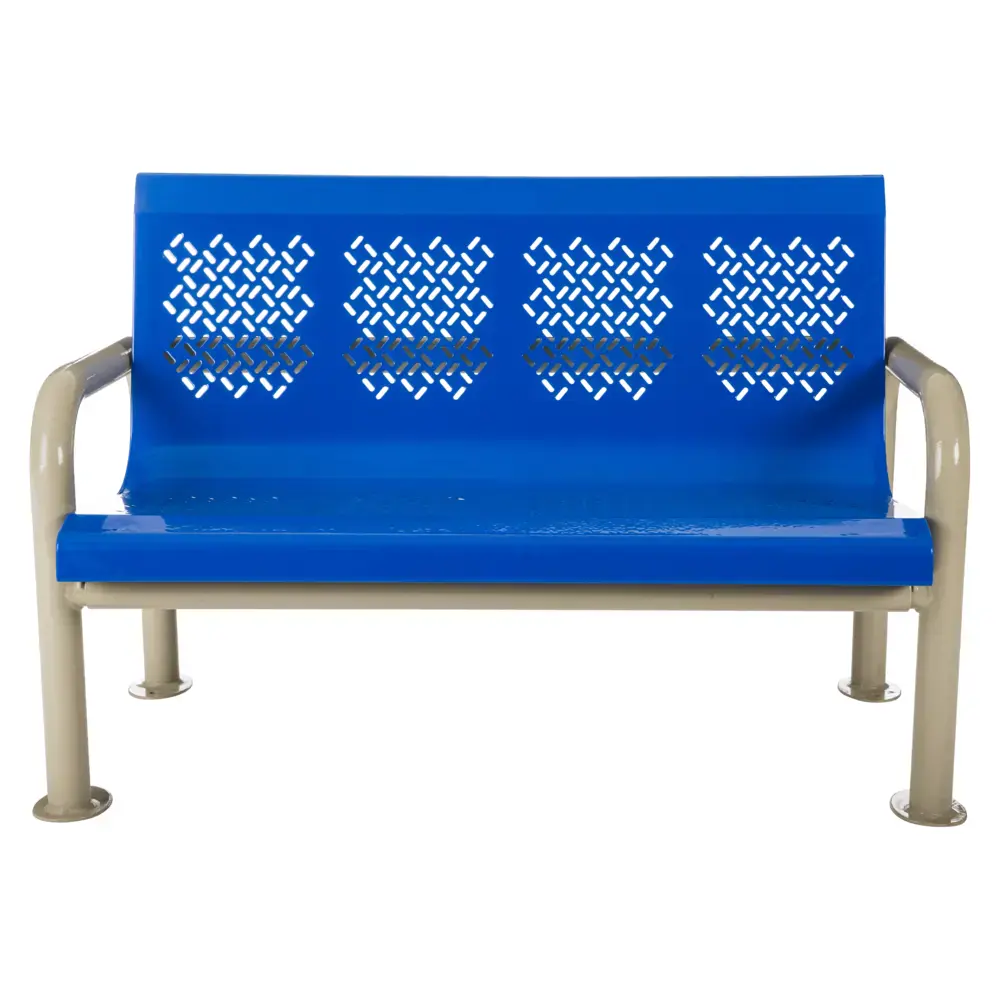
| Perforated Bench | Civic plazas, schools, downtown districts, and branded public spaces | 4, 6, or 8 feet | Perforated metal seating; custom-logo options available | Powder coat or thermoplastic finish; in-ground or pad mount | Contemporary appearance and customization potential |
| Chautauqua Contour Bench | Premium parks, memorial areas, campuses, and destination spaces | 4, 6, or 8 feet | Recycled plastic seating with steel support structure | Powder-coated frame; pad mount | Distinctive design and contoured seating |
| Player’s Bench | Ballfields, sports complexes, dugouts, and recreation facilities | 4, 6, or 8 feet | Treated pine, perforated steel, aluminum, or frame only; backed or backless | Mounting options vary by configuration | Purpose-built seating for athletes and teams |
Current product options include multiple lengths, seating materials, frame finishes, backed or backless configurations, and permanent mounting choices.
When Is an Economy Bench the Best Choice?
 The Economy Bench is a strong choice when a municipality needs dependable seating without adding an ornate design element. Its simple profile fits naturally into neighborhood parks, playgrounds, trails, picnic areas, bus waiting areas, and other practical public spaces.
It is available in 6- and 8-foot lengths with recycled plastic or treated pine seating. Municipalities can select a galvanized or powder-coated frame and choose between in-ground and pad-mounted installation.
Best for:
- Projects with limited furnishing budgets
- Neighborhood and community parks
- Trails and walking paths
- Playground seating
- Picnic and recreation areas
- Locations where a simple appearance is preferred
Recycled plastic seating can be useful for organizations seeking a consistent appearance and an alternative to traditional lumber. Treated pine may be appropriate when a more natural look is desired.
When Should a Municipality Choose a Hoop Bench?
The Hoop Bench combines practical seating with a more decorative frame. Its curved supports give it a recognizable appearance without making the design overly elaborate.
Available in 6- and 8-foot lengths, the Hoop Bench can be configured with recycled plastic or treated pine seating. Frame options include galvanized or powder-coated finishes, while installation choices include in-ground and pad mounting.
Best for:
- Downtown sidewalks
- Municipal building entrances
- Courtyards and plazas
- Landscaped parks
- Shopping districts
- Community gathering areas
The Hoop Bench works especially well when officials want site furnishings that look more intentional than basic park seating but remain compatible with a wide range of architectural styles.
What Makes a Perforated Bench a Good Choice for Civic Spaces?
The Perforated Bench offers a clean, commercial appearance suited to prominent public settings. Its perforated construction creates a visually lighter profile than solid seating while supporting a coordinated municipal streetscape.
The bench is available in 4-, 6-, and 8-foot lengths. Finish options include powder coat or thermoplastic, and the bench can be ordered for in-ground or pad-mounted installation.
Customized logos can also be incorporated into select Perforated Bench configurations. A city seal, park name, school identity, donor recognition, or community logo can turn an everyday furnishing into a recognizable part of the site.
Best for:
- Civic plazas
- Downtown improvement projects
- Municipal campuses
- Schools and universities
- Transit areas
- Branded parks and recreation facilities
- Community or donor recognition projects
A logo bench can help municipalities establish a consistent visual identity across multiple parks, streets, or public facilities without relying on separate signage.
When Is a Chautauqua Contour Bench the Best Option?
The Chautauqua Contour Bench is designed for spaces where comfort, appearance, and long-term commercial use are all priorities. Its contoured form and recycled plastic seating give it a distinctive profile suited to more visible or carefully designed locations.
It is available in 4-, 6-, and 8-foot lengths with a powder-coated frame and pad-mount installation. Steel cross supports and solid steel bars reinforce its commercial construction.
Best for:
- Destination parks
- Memorial gardens
- Municipal campuses
- Libraries and community centers
- Waterfronts and overlooks
- Cultural attractions
- Premium downtown seating areas
This model is a good fit when benches are intended to contribute to the overall appearance of a project rather than simply provide a place to sit.
What Type of Bench Is Best for Athletic Fields?
The Player’s Bench is intended for baseball fields, softball fields, soccer facilities, football fields, dugouts, and other athletic environments.
It is available in 4-, 6-, and 8-foot lengths. Depending on the configuration, seating options include treated pine, perforated steel, aluminum, or a frame-only option. Backed and backless styles are also available.
Best for:
- Baseball and softball dugouts
- Soccer sidelines
- Football practice areas
- School athletic facilities
- Municipal sports complexes
- Team staging and rest areas
Backless models allow athletes to sit from either side and may work well in narrow or frequently reconfigured spaces. Backed models provide additional support where players may remain seated for longer periods.
Which Bench Is Best for Each Type of Municipal Space?
Best Bench for a Neighborhood Park
Choose an Economy Bench when the priority is dependable seating, straightforward installation, and broad compatibility with the surrounding park.
Best Bench for a Downtown Streetscape
Choose a Hoop Bench for a decorative but versatile design, or a Perforated Bench for a more contemporary commercial appearance.
Best Bench for a Municipal Logo
Choose a custom Perforated Bench when the city, park department, school, or sponsoring organization wants its identity integrated into the furnishing.
Best Bench for a Premium Public Space
Choose a Chautauqua Contour Bench for memorial areas, destination parks, municipal campuses, or other highly visible projects.
Best Bench for a Sports Complex
Choose a Player’s Bench and select the length, seating material, and backed or backless design based on the sport and facility layout.
Best Bench for a Limited Budget
Choose an Economy Bench, but compare the full installed cost rather than the purchase price alone. Mounting preparation, surface work, maintenance, and replacement expectations can affect long-term value.
Should a Municipal Bench Be Pad Mounted or Installed In-Ground?
Mounting method affects security, installation requirements, placement flexibility, and the appearance of the completed project.
Pad-Mounted Benches
A pad-mounted bench is attached to an existing concrete surface. This method is often appropriate for:
- Downtown sidewalks
- Concrete plazas
- Municipal entrances
- Paved recreation areas
- Sites where the bench location has already been established
Before ordering, verify the concrete condition, slab thickness, anchor requirements, underground utilities, and required mounting hardware.
In-Ground Benches
An in-ground bench uses extended supports secured below grade, typically in concrete. This method may be appropriate for:
- Parks
- Trails
- Landscaped areas
- Locations without an existing concrete pad
- Sites requiring a permanent installation
Confirm underground utility locations and installation depths before excavation. Local soil conditions, frost depth, drainage, and site specifications should also be considered.
Which Bench Material Is Best for Outdoor Use?
The best material depends on the desired appearance, available maintenance resources, and environmental conditions.
Recycled Plastic
Recycled plastic seating provides a consistent appearance and does not require the same refinishing approach as traditional lumber. It is available on several Jamestown Advanced Products bench models, including the Economy, Hoop, and Chautauqua Contour Benches.
Treated Pine
Treated pine offers a traditional appearance that works well in parks, wooded spaces, and recreation areas. Municipalities should include periodic inspection and maintenance in their site-furnishing plan.
Perforated Steel
Perforated steel creates a durable commercial look suited to civic areas, athletic facilities, schools, and high-use public spaces. Available coatings can help municipalities coordinate the bench with nearby furnishings.
Aluminum
Available on select Player’s Bench configurations, aluminum can be a practical seating choice for athletic environments.
How Can Municipalities Make Benches More Accessible?
Bench accessibility involves more than selecting a particular model. Officials should evaluate the complete site, including the route to the bench, surrounding surface, available maneuvering space, slope, obstructions, and relationship to other furnishings.
For federally regulated outdoor developed areas, U.S. Access Board guidance identifies a 36-by-48-inch clear ground space near a bench, with one side adjoining an outdoor recreation access route or trail. Requirements can differ depending on the facility and governing standard, so project planners should verify applicable federal, state, and local requirements.
Practical accessibility considerations include:
- Connecting seating areas to an accessible pedestrian route
- Providing stable, firm, and appropriately graded surfaces
- Leaving room beside the bench for a wheelchair or mobility device
- Avoiding placement that narrows a sidewalk or circulation path
- Considering benches with back support for longer rest periods
- Distributing benches at reasonable intervals along longer routes
- Coordinating the design with the project architect or accessibility specialist
A bench should not be described as accessible solely because it has a back or armrest. The surrounding site layout is a major part of accessibility.
How Should Municipalities Choose Bench Colors and Custom Logos?
Bench colors should support the broader site plan rather than being selected independently. Review nearby trash receptacles, picnic tables, bike racks, bollards, railings, light poles, signs, and architectural finishes.
Jamestown Advanced Products offers customization on select site furnishings, including custom colors and logos. Because manufacturing and finishing are handled in-house, the company can help coordinate qualifying products across a municipal project.
Custom logos may be useful for:
- City or village seals
- Parks and recreation department branding
- School and university identities
- Memorial or donor recognition
- Downtown district branding
- Park names
- Community anniversary projects
Request custom work early. Logo preparation, approvals, color matching, and production requirements should be addressed before the project reaches its installation phase.
What Practical Tips Can Improve a Municipal Bench Project?
Create a Site-Furnishing Standard
Select a limited family of bench styles, colors, and materials that can be repeated across municipal properties. Standardization simplifies future purchasing and creates a more consistent public environment.
Observe How People Already Use the Space
Look for informal gathering points, shaded areas, scenic views, playground supervision locations, transit waiting areas, and places where people currently sit on walls or curbs.
Consider Sun, Shade, Wind, and Drainage
A well-designed bench may go unused if it is placed in full afternoon sun, exposed to strong winds, or located where water collects.
Protect Circulation Routes
Do not place a bench where seated visitors, wheelchairs, strollers, bags, or mobility devices will obstruct the sidewalk.
Coordinate Nearby Amenities
Benches are often most useful near trash receptacles, bike racks, pathways, playgrounds, athletic fields, parking areas, and gathering spaces. Maintain enough separation to prevent odor, crowding, or conflicts between users.
Confirm Mounting Details Before Ordering
Identify whether the bench will be installed on concrete, asphalt, pavers, soil, or another surface. Make sure the selected mounting configuration matches the installation plan.
Plan for Maintenance Access
Maintenance crews should be able to inspect, clean, mow, remove snow, and service the area without damaging the bench or surrounding landscaping.
Use Multiple Bench Types When Necessary
A municipality does not need to use one model everywhere. A coordinated program may use Economy Benches along trails, Hoop or Perforated Benches downtown, Chautauqua Contour Benches at signature locations, and Player’s Benches at athletic facilities.
What Common Bench-Purchasing Mistakes Should Municipalities Avoid?
Selecting a Bench Based Only on Price
The lowest initial price may not produce the lowest installed or long-term cost. Compare materials, finish, mounting preparation, expected maintenance, and replacement needs.
Ignoring the Installation Surface
Ordering an in-ground bench for a finished concrete plaza—or a pad-mounted bench for an undeveloped lawn—can create delays and added expense.
Blocking Sidewalks and Accessible Routes
Include the bench, occupied seating area, and adjacent clear space in the layout. Do not evaluate the bench footprint alone.
Using Residential Seating in Commercial Public Spaces
Residential patio furniture is generally not designed for repeated public use, permanent mounting, or municipal maintenance conditions. Specify commercial outdoor site furnishings appropriate for the expected environment.
Choosing Style Without Considering Comfort
Backless seating may be suitable for short stops and athletic areas, while backed or contoured seating may be better for parks, senior-oriented spaces, and longer visits.
Mixing Unrelated Colors and Designs
Too many furnishing styles can make a public space look unplanned. Develop a consistent palette and repeat complementary designs across the site.
Forgetting Future Replacement Needs
Document model names, dimensions, colors, materials, and mounting configurations. Clear records make it easier to expand a park or replace furnishings later.
Waiting Too Long to Request Customization
Custom colors and logos require additional coordination. Include them in the original project schedule rather than treating them as a last-minute addition.
Frequently Asked Questions About Municipal Benches
What Is the Best Type of Bench for a Public Park?
An Economy Bench is a practical option for general park seating, while a Hoop Bench or Chautauqua Contour Bench may be preferred when appearance and comfort are higher priorities. The final choice should reflect the park’s design, expected use, maintenance plan, and installation surface.
What Is the Best Bench for a Downtown Sidewalk?
Hoop and Perforated Benches are strong choices for downtown sidewalks and plazas. The Hoop Bench offers a decorative profile, while the Perforated Bench provides a contemporary commercial appearance and can support custom-logo applications.
Should an Outdoor Bench Have a Back?
A backed bench generally provides more support for visitors who will sit for longer periods. Backless benches can be useful in athletic areas, narrow spaces, and locations where people may approach the seat from either side.
Can Municipal Benches Include a Custom Logo?
Select Jamestown Advanced Products site furnishings can be customized with logos or custom colors. The Perforated Bench is an appropriate option for city seals, park names, school branding, donor recognition, and other municipal identities.
How Long Should a Municipal Bench Be?
Four-foot benches work well in compact areas or for smaller groups. Six-foot benches are a versatile general-purpose size, while 8-foot benches provide greater seating capacity for busy parks, athletic facilities, and gathering spaces.
Are Recycled Plastic Benches Good for Parks?
Recycled plastic seating can be a practical municipal option because it provides a consistent appearance and is available across several commercial bench styles. Buyers should still evaluate the supporting frame, mounting method, environment, and overall maintenance plan.
Should Park Benches Be Permanently Mounted?
Permanent mounting is generally appropriate in unattended public spaces, high-traffic areas, and locations where movement or theft is a concern. The correct method depends on whether the site has an existing concrete pad or requires an in-ground installation.
Choose American-Made Benches for Your Municipal Project
Jamestown Advanced Products manufactures durable commercial outdoor products in Jamestown, New York. Its American-made bench lineup gives municipalities options for neighborhood parks, downtown districts, civic plazas, trails, municipal campuses, and sports facilities. The company’s current bench collection includes Economy, Hoop, Perforated, Chautauqua Contour, and Player’s Bench configurations.
With in-house manufacturing, multiple lengths, seating materials, mounting styles, frame finishes, custom colors, and select custom-logo capabilities, Jamestown Advanced Products can help officials build a coordinated site-furnishing plan rather than purchasing unrelated products one location at a time.

