









What Kind of Picnic Tables Should You Purchase for a Municipal Space?

Quick answer: The right commercial picnic table depends on how heavily the space will be used, whether the tables need to move, how they will be installed, and what level of accessible seating the site requires. Heavy-duty tables work well in busy parks, portable tables support flexible layouts, pedestal tables create permanent seating areas, and accessible designs help municipalities serve visitors with a wider range of mobility needs.
Choosing the right table may seem straightforward, but municipal buyers must account for more than appearance and seating capacity. A table that works well in a quiet neighborhood park may not be the best option for a busy athletic complex, downtown plaza, school campus, or public picnic shelter.
The best approach is to match the table’s construction, configuration, accessibility features, materials, and installation method to the way the space will actually be used.
What Should Municipalities Consider Before Purchasing Outdoor Tables?
Before comparing individual picnic table models, evaluate the conditions at the installation site.
Start with these questions:
- How many people are expected to use the space?
- Will the tables receive daily, seasonal, or occasional use?
- Do tables need to remain in one location or move for events and maintenance?
- Is the area supervised or open to the public at all hours?
- Will the tables be installed on concrete, pavement, grass, gravel, or another surface?
- How much accessible seating is required?
- Does the community want a coordinated color scheme or municipal branding?
- Who will be responsible for cleaning, inspections, repairs, and seasonal maintenance?
These questions help narrow the choice between a Heavy Duty Picnic Table, Portable Picnic Table, Single Pedestal Picnic Table, Universal Access Picnic Table, and ADA-Accessible Picnic Table.
Which Picnic Table Is Best for a High-Traffic Public Space?
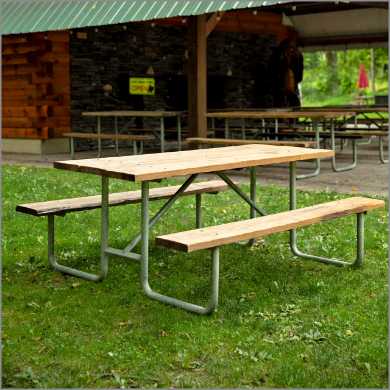
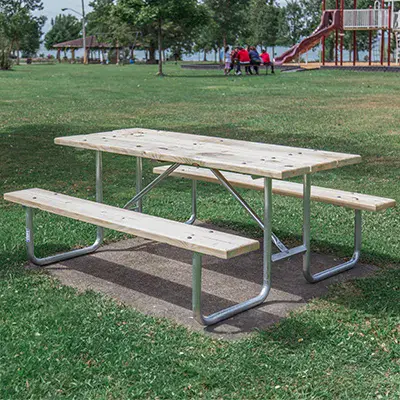
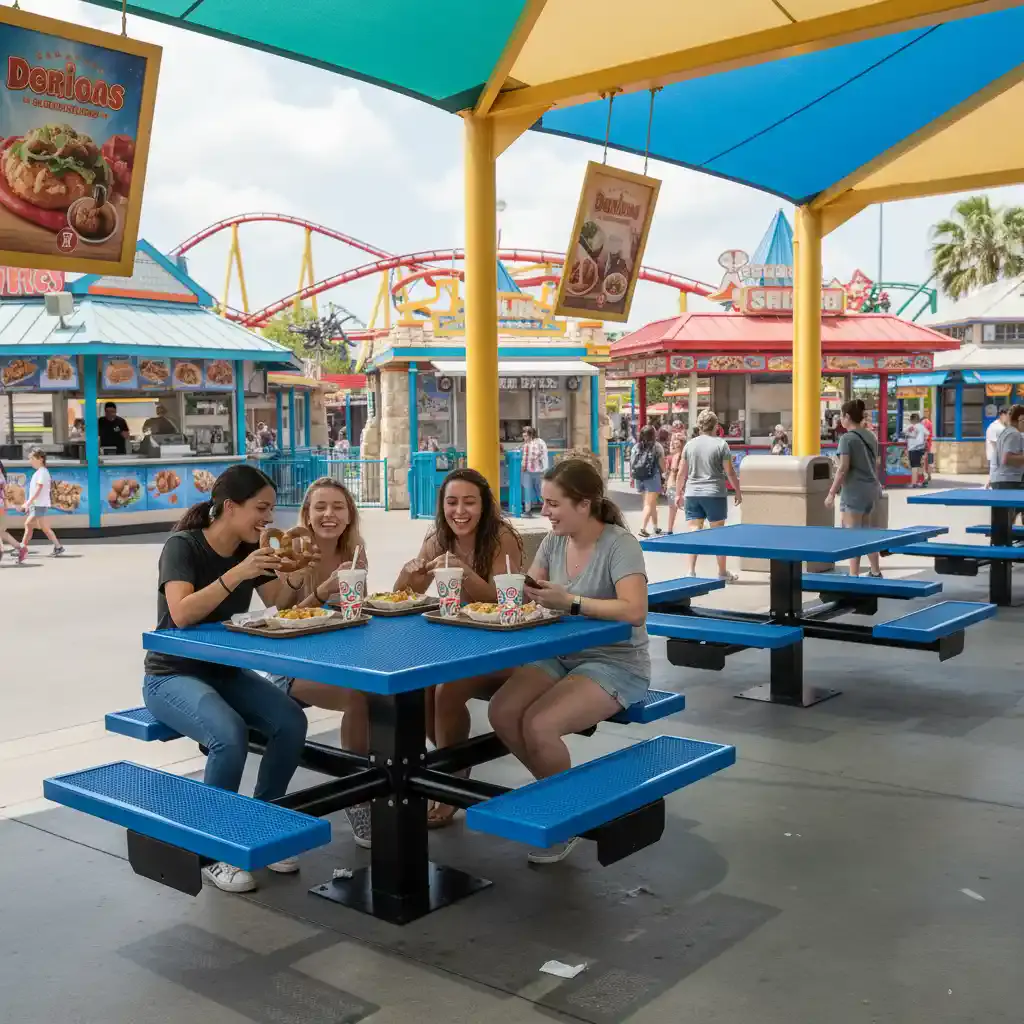
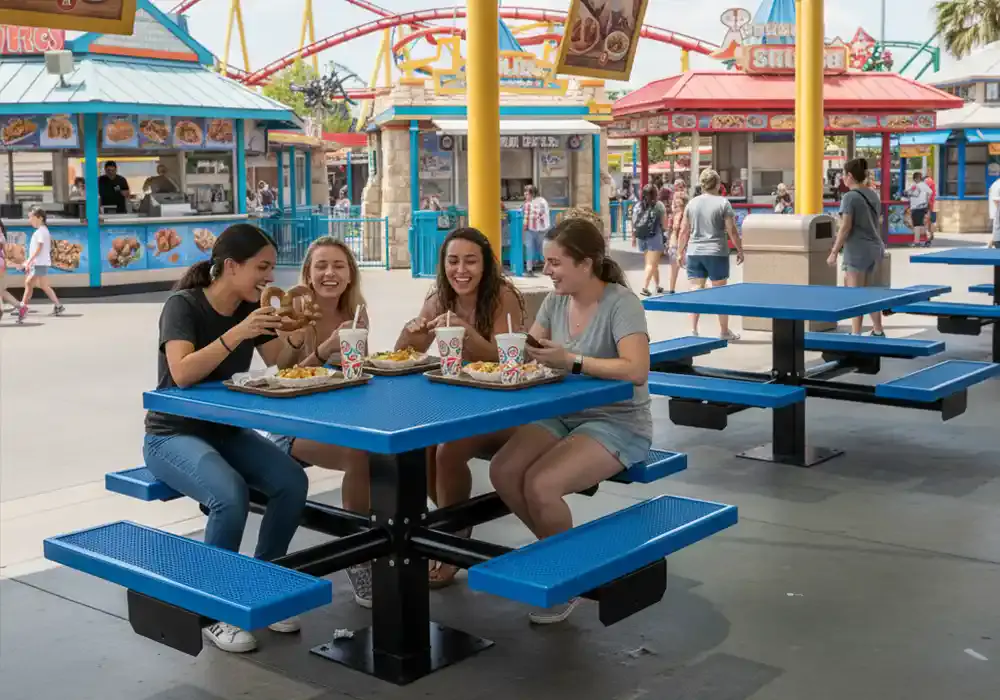
 A Heavy Duty Picnic Table is generally the best starting point for parks, athletic complexes, public campgrounds, schools, rest areas, and other locations that experience frequent use.
Heavy-duty tables are designed for demanding outdoor environments where furniture may be exposed to constant use, changing weather, repeated cleaning, and limited supervision. Jamestown Advanced Products offers Heavy Duty Picnic Tables in several lengths and with seating and tabletop material choices such as recycled plastic, treated or untreated pine, aluminum, expanded metal, and decorative perforated metal.
A heavy-duty model may be appropriate when:
- The site receives substantial daily or weekend traffic.
- The table will remain outdoors throughout the year.
- Durability is more important than easy relocation.
- Maintenance crews need commercial-grade furnishings.
- The table will be placed in an unsupervised public area.
- The municipality wants multiple material or finish options.
The heavier construction can also help create a more stable table for community parks, picnic shelters, trailheads, sports facilities, and other shared recreational spaces.
When Should You Choose a Portable Picnic Table?
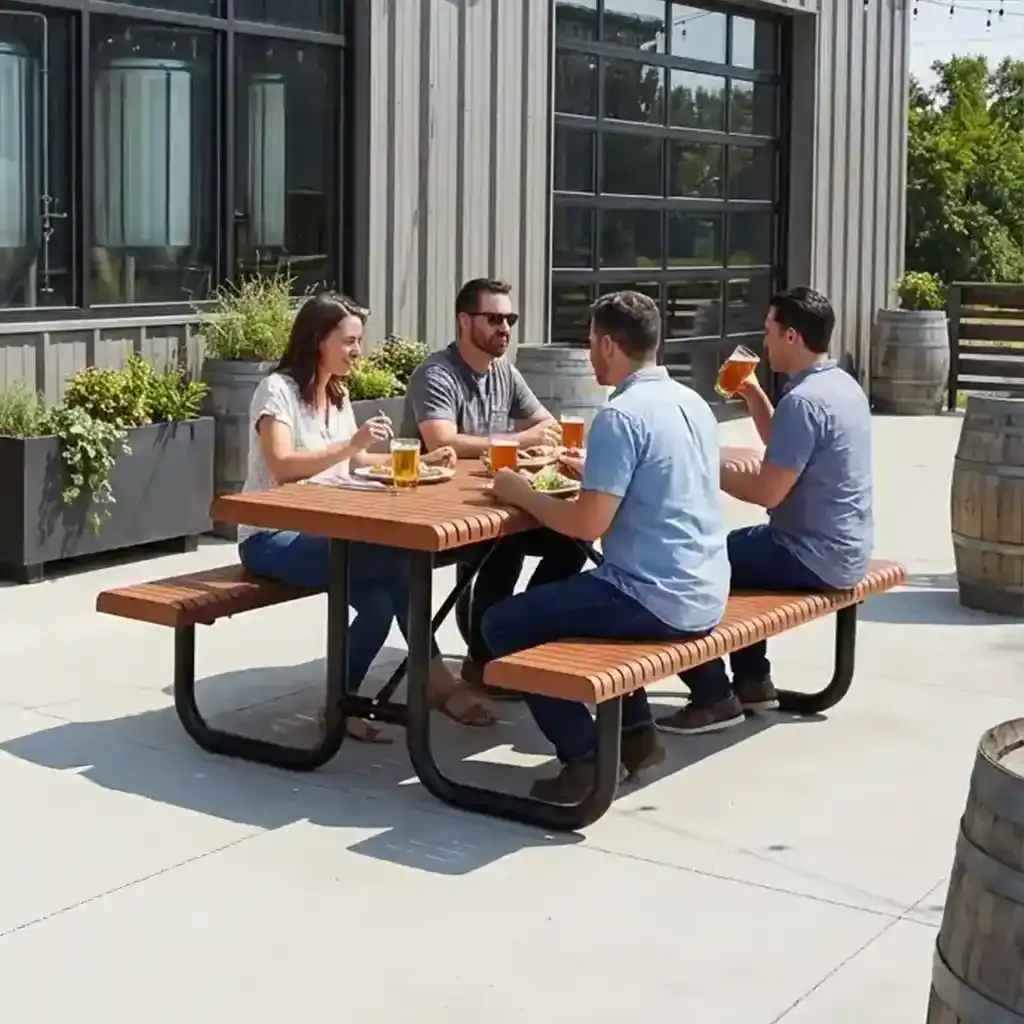
 A Portable Picnic Table is a good choice when seating arrangements may change throughout the year.
Municipalities may need to reposition tables for festivals, farmers markets, outdoor programming, maintenance, seasonal storage, or changing pedestrian patterns. A portable table provides more flexibility than a permanently installed model while still offering commercial outdoor construction.
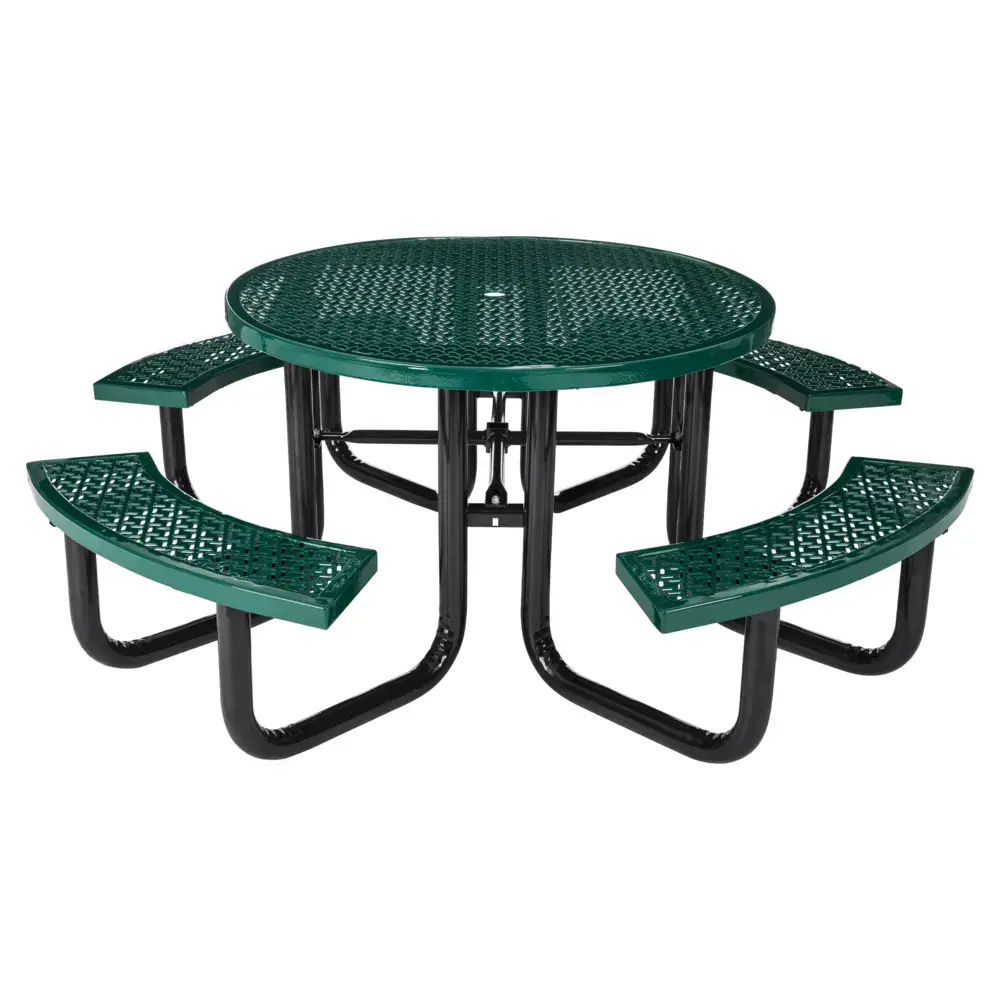
Jamestown Advanced Products offers portable tables in round and square configurations. Available material and finish options include decorative perforated steel and expanded metal, with powder-coated or thermoplastic finishes depending on the selected configuration. The design also incorporates a walk-through layout intended to improve entry and reduce common tripping concerns.
Portable tables are especially useful for:
- Downtown plazas
- Community event spaces
- Pool decks
- School courtyards
- Recreation centers
- Municipal patios
- Seasonal concession areas
- Flexible outdoor classrooms
“Portable” does not necessarily mean that one person can easily pick up the table. Commercial portable tables are typically moved by maintenance staff using appropriate equipment and procedures. The primary benefit is that they are not permanently anchored to one location.
Why Choose a Single Pedestal Picnic Table?
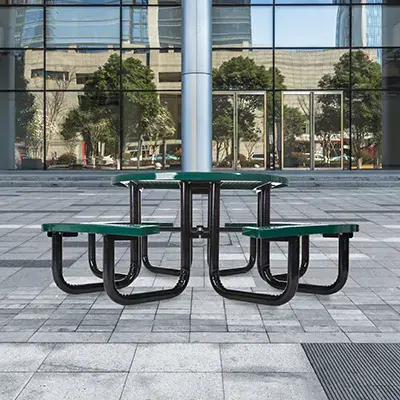
A Single Pedestal Picnic Table creates an organized, permanent-looking seating area while reducing the number of table legs around the perimeter.
The central support can make the space beneath and around the table feel less cluttered. Pedestal tables work particularly well in paved locations where municipalities want tables to remain consistently aligned and positioned.
Jamestown Advanced Products offers Single Pedestal Picnic Tables in round and square styles. A three-seat ADA option is also available for projects that require an accessible seating position within this table style.
Consider a Single Pedestal Picnic Table for:
- Streetscapes
- Downtown plazas
- Courtyards
- Pool areas
- Public patios
- Concession areas
- Outdoor dining spaces
- Small seating nodes along walking routes
Before ordering, confirm how the table will be mounted and whether the installation surface can accommodate the required anchoring system. Pedestal tables are best planned as part of the site layout rather than added without considering underground utilities, pavement construction, drainage, and circulation.
What Is the Difference Between a Universal Access Table and an ADA-Accessible Table?
Both tables are intended to support more inclusive public spaces, but their layouts and applications are not necessarily identical.
Universal Access Picnic Table
 A Universal Access Picnic Table is a strong choice when accessibility is a central part of the overall seating plan rather than an isolated accommodation.
Jamestown Advanced Products describes its Universal Access Picnic Table as being designed to exceed ADA accessibility standards. The table uses a non-tip, non-trip, walk-through design and is offered in six- and eight-foot lengths with several seat and tabletop material options, including wood, aluminum, expanded metal, and decorative perforated metal. Galvanized and powder-coated frame finishes are also available.
This model is well suited for:
- Inclusive playground areas
- Accessible picnic shelters
- Public parks
- Municipal campgrounds
- School campuses
- Community centers
- Senior recreation areas
- Spaces designed for group activities
ADA-Accessible Picnic Table
An ADA-Accessible Picnic Table is useful when a municipality wants a traditional rectangular picnic table configuration with a designated accessible seating position.
Jamestown Advanced Products offers ADA-Accessible Picnic Tables in multiple lengths and with materials including recycled plastic, treated or untreated pine, aluminum, expanded metal, and decorative perforated metal. The table also features a non-tip, non-trip, walk-through design.
This model can be a practical fit for:
- Standard park picnic areas
- Municipal shelters
- Campgrounds
- Trail rest areas
- Athletic complexes
- Schools and universities
- Public gathering areas
The right choice depends on the number and location of accessible seating positions, the intended group size, and the site plan.
An accessible table alone does not make the entire picnic area accessible. The table must also be properly positioned on an appropriate surface and connected to an accessible route. Federal accessibility guidance for outdoor developed areas addresses clear ground space around usable sides of picnic tables, as well as accessible routes, firm and stable surfaces, and maneuvering space. Municipalities should have project-specific requirements reviewed by the appropriate designer, engineer, accessibility coordinator, or authority having jurisdiction.
How Do the Different Municipal Picnic Tables Compare?
| Table Type | Best Suited For | Layout or Installation Priority | Accessibility Consideration | Primary Buying Advantage |
|---|---|---|---|---|
| Heavy Duty Picnic Table | Busy parks, athletic facilities, campgrounds, and high-use public areas | Durable, long-term placement | Accessible configurations should be included elsewhere in the seating plan when required | Built for frequent public use and available in multiple materials and lengths |
| Portable Picnic Table | Plazas, courtyards, seasonal areas, and event spaces | Flexible placement | Select configurations and surrounding clearances carefully | Can be repositioned as programming or maintenance needs change |
| Single Pedestal Picnic Table | Streetscapes, patios, pool areas, and organized seating zones | Planned, fixed placement | A three-seat ADA option is available | Creates an orderly footprint with fewer perimeter supports |
| Universal Access Picnic Table | Inclusive parks, shelters, playgrounds, and community spaces | Accessible group seating | Designed to exceed ADA accessibility standards | Makes accessible seating a central part of the table design |
| ADA-Accessible Picnic Table | Traditional picnic areas, campgrounds, and municipal parks | Conventional rectangular table layout | Provides a designated accessible table configuration | Combines familiar picnic-table seating with an accessible position |
Which Picnic Table Is Best for Each Type of Municipal Space?
 Best for Busy Public Parks: Heavy Duty Picnic Table
Choose a Heavy Duty Picnic Table for parks that experience regular family gatherings, community events, summer programming, and daily recreational use.
Its commercial construction and range of material choices make it easier to match the table to local maintenance capabilities and environmental conditions.
Best for Downtown Plazas: Portable or Single Pedestal Picnic Table
Portable tables allow a plaza to be reconfigured for events, while pedestal tables create more permanent seating zones.
The decision should depend on whether the community needs flexibility or a consistent streetscape layout.
Best for Picnic Shelters: Heavy Duty or ADA-Accessible Picnic Table
A combination of Heavy Duty and ADA-Accessible Picnic Tables can support durability while providing accessible seating throughout the shelter area.
Avoid placing all accessible tables in a separate or less desirable location. Accessible seating should be integrated into the overall experience.
Best for Inclusive Recreation Areas: Universal Access Picnic Table
Universal Access Picnic Tables are particularly appropriate near accessible playgrounds, community centers, senior recreation areas, and spaces designed for users with varied mobility needs.
Best for Municipal Campgrounds: Heavy Duty, Universal Access or ADA-Accessible Picnic Table
Campgrounds often need more than one table style. Heavy Duty Picnic Tables can serve standard sites, while Universal Access or ADA-Accessible Picnic Tables can be placed at accessible campsites, shared shelters, and common areas.
Best for School Courtyards and Outdoor Classrooms: Portable Picnic Table
Portable tables make it possible to rearrange seating for classes, lunch periods, special events, and maintenance. Round and square configurations can also support smaller group discussions more effectively than long rectangular tables.
Best for Pool Decks and Concession Areas: Single Pedestal Picnic Table
A pedestal design can create clearly defined seating areas and reduce the number of supports around the perimeter. Select materials and finishes suited to moisture, cleaning routines, and the conditions of the specific location.
What Table Size and Shape Should You Purchase?
Table size should reflect the number of visitors, the available space, and the way groups use the site.
Longer rectangular tables work well for:
- Picnic shelters
- Campgrounds
- Group dining
- Athletic complexes
- Large family gatherings
- Outdoor classrooms
Round or square tables work well for:
- Courtyards
- Plazas
- Pool areas
- Small group seating
- Outdoor dining
- Conversation areas
Do not choose a table based only on how many seats can fit into the smallest possible area. Leave sufficient room for circulation, maintenance access, mobility devices, strollers, and movement between tables.
A scaled site plan can help determine whether the proposed quantity and arrangement will work before the tables are ordered.
Which Picnic Table Materials and Finishes Are Best?
The best material depends on the environment, maintenance program, desired appearance, and project budget.
Recycled Plastic
Recycled plastic provides a finished appearance and does not require the same staining or sealing routines commonly associated with wood. It is a practical option for municipalities seeking consistent color and reduced routine surface maintenance.
Treated or Untreated Wood
Wood provides a traditional park appearance and may be preferred for wooded parks, historic settings, campgrounds, and natural recreation areas.
Municipalities should consider long-term refinishing, weathering, splinters, moisture exposure, and replacement procedures when selecting wood.
Expanded Metal
Expanded metal allows water and debris to pass through the surface, making it useful in busy public areas. A protective finish can add color and help protect the steel from outdoor exposure.
Decorative Perforated Metal
Decorative perforated metal provides a more refined appearance for plazas, streetscapes, campuses, and coordinated municipal furnishing programs.
Aluminum
Aluminum can be a practical seating and tabletop material where corrosion resistance and lower weight are priorities. Buyers should still evaluate the complete table construction, finish, anchoring, and expected use.
Powder-Coated, Thermoplastic and Galvanized Finishes
Finish selection should reflect moisture exposure, winter maintenance, coastal conditions, cleaning chemicals, desired color, and the possibility of scratches or surface wear.
Jamestown Advanced Products offers a variety of material and finish combinations across its picnic table line. Available combinations vary by model, so specifications should be confirmed before bidding or ordering.
Can Municipal Picnic Tables Be Customized?
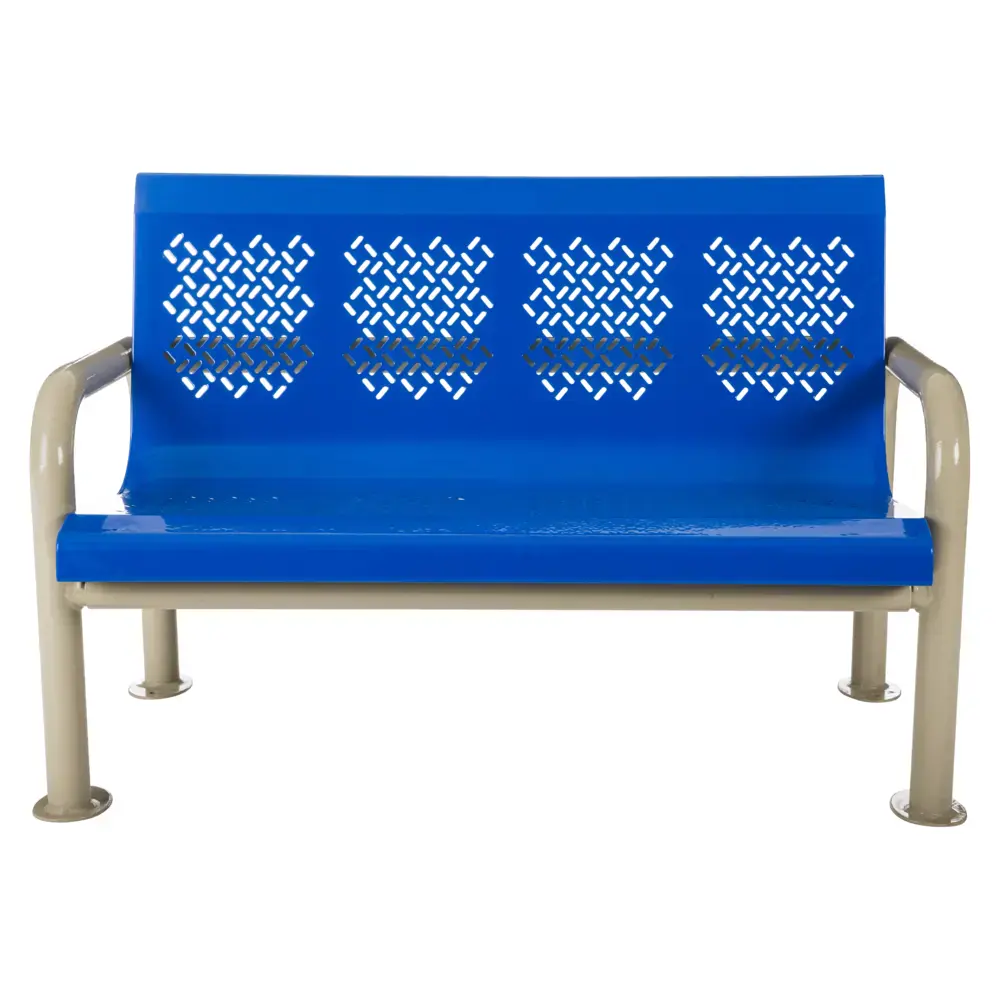
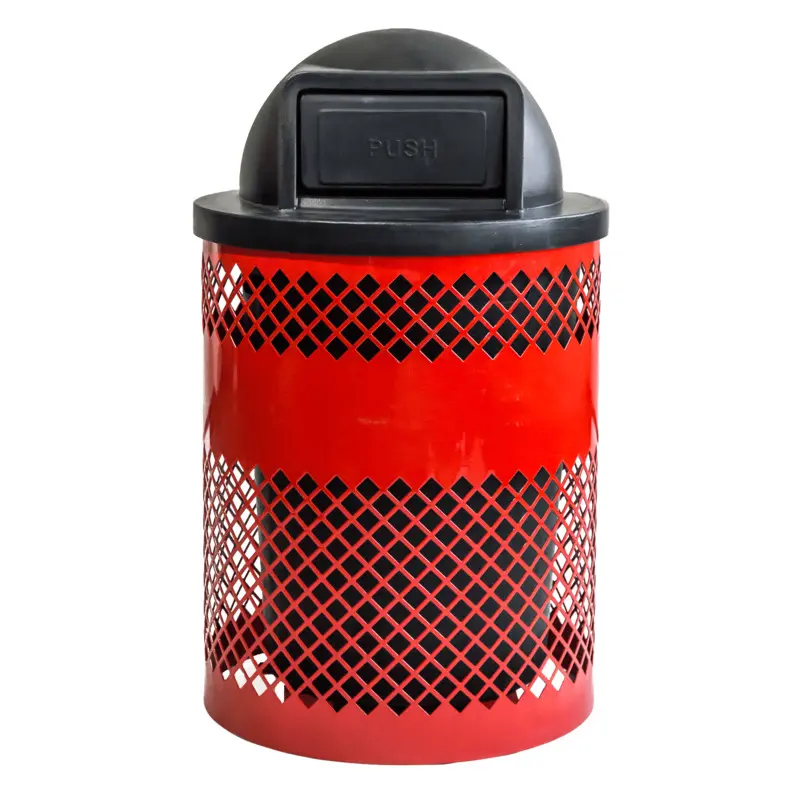
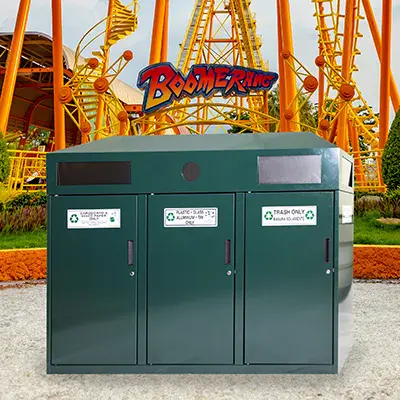
Customization can help tables coordinate with surrounding benches, trash receptacles, bike racks, planters, and other site furnishings.
Jamestown Advanced Products offers custom color and logo options on select site furnishings, including picnic tables. This can help municipalities incorporate school colors, park branding, community identities, department logos, or a coordinated streetscape palette.
Before specifying customization, confirm:
- Whether the selected model supports the requested customization
- Logo size and file requirements
- Available powder-coat or material colors
- Minimum order requirements
- Production lead time
- Replacement-part availability
- How custom colors will be documented for future orders
Standardizing colors, materials, and components across multiple parks can simplify future purchasing and maintenance.
What Practical Steps Should Buyers Take Before Ordering?
1. Conduct a Site Inventory
Record the condition, dimensions, materials, and accessibility of the tables already in use. This will help identify which products are performing well and where improvements are needed.
2. Match the Table to Actual Traffic
Do not specify the same table for every park simply to reduce the number of product models. A downtown plaza, neighborhood playground, campground, and athletic complex may have very different requirements.
3. Plan Accessible Seating Early
Accessible tables, routes, surfaces, and clear spaces should be incorporated during site planning. Adding an accessible table after pavement, landscaping, or shelter layouts are complete can create avoidable conflicts.
4. Review the Installation Surface
Determine whether the table will sit on concrete, asphalt, pavers, compacted aggregate, grass, or another surface. Confirm that the surface and mounting method are appropriate for the selected model.
5. Consider Maintenance Equipment
Make sure mowers, snow-removal equipment, cleaning equipment, and utility vehicles can move around the table without damaging it.
6. Standardize Where It Makes Sense
Using consistent materials, colors, and finishes across a park system can simplify replacement orders and create a coordinated appearance.
7. Request Product Documentation
Before finalizing a public bid or purchase order, obtain current drawings, dimensions, material specifications, finish information, mounting details, assembly instructions, and accessibility information.
What Common Picnic Table Purchasing Mistakes Should Municipalities Avoid?
Choosing Residential Furniture for a Public Setting
Residential tables are generally not designed for the use, exposure, maintenance routines, and unsupervised conditions found in municipal spaces.
Selecting a Table Based Only on Initial Price
A lower purchase price may not represent the lowest long-term cost. Consider expected service life, refinishing, hardware replacement, labor, vandalism, and maintenance requirements.
Ignoring the Surrounding Surface
Even an appropriately designed accessible table can be difficult or impossible to use when it is placed on an unstable surface or separated from the accessible route.
Failing to Leave Enough Circulation Space
Crowding too many tables into a shelter or patio can make the area uncomfortable and create obstacles for mobility devices, maintenance staff, and emergency access.
Treating All Accessible Tables as Identical
Universal Access, ADA-accessible, pedestal-accessible, and conventional tables serve different layouts. Compare the actual dimensions and seating positions rather than relying only on the product name.
Forgetting About Anchoring and Security
Determine whether a table should remain movable, be secured to a surface, or use a permanent installation method. The right answer may differ between supervised courtyards and remote public parks.
Ordering Custom Products Without Planning for Replacements
Document custom colors, materials, logos, and model numbers so matching replacement components can be ordered later.
Frequently Asked Questions About Municipal Picnic Tables
What is the best picnic table for a public park?
A Heavy Duty Picnic Table is often the best option for a high-use public park because it is designed for frequent outdoor use and is available in several lengths and materials. Accessible table models should also be incorporated where required by the site plan and applicable accessibility standards.
Should municipal picnic tables be portable or permanently installed?
Portable tables are useful for spaces that host events or require changing layouts. Permanently positioned or pedestal tables are better when the municipality wants a consistent layout, greater placement control, or reduced unauthorized movement.
What is the difference between an ADA-Accessible Picnic Table and a Universal Access Picnic Table?
An ADA-Accessible Picnic Table typically combines a traditional picnic-table layout with an accessible seating position. A Universal Access Picnic Table places a stronger emphasis on inclusive access as part of the overall table design. Buyers should compare drawings, dimensions, seating positions, and site requirements before selecting either model.
Are metal or recycled-plastic picnic tables better for municipalities?
Neither material is automatically best for every project. Metal can provide a durable, low-profile surface for busy public spaces, while recycled plastic offers consistent color and reduced refinishing requirements. The decision should account for climate, maintenance, appearance, use level, and project budget.
Can municipal picnic tables be customized with a city logo?
Select Jamestown Advanced Products site furnishings can be ordered with custom colors or logos. Availability depends on the product and configuration, so customization should be confirmed before the specifications or purchase order are finalized.
How much space should be left around a picnic table?
The required space depends on the table, site, route, surface, and applicable accessibility requirements. Accessibility guidance for outdoor developed areas includes clear ground space around usable sides of picnic tables. A qualified project professional should verify the final layout.
Choose Commercial Picnic Tables for the Way Your Community Uses the Space
The best municipal picnic table is not simply the strongest or least expensive model. It is the table that fits the site’s traffic, layout, accessibility needs, maintenance program, environment, and long-term purchasing plan.
Jamestown Advanced Products manufactures American-made commercial outdoor products in Jamestown, New York. In-house production supports a range of table materials, finishes, accessible configurations, and customization options for parks, municipalities, schools, campgrounds, recreation facilities, and other public spaces.

