





Why Choose Recycled Plastic Lumber for Picnic Tables and Benches?

August 28, 2026

Quick Answer: Recycled plastic lumber is a strong choice for outdoor picnic tables and benches because it resists rot, decay, moisture, UV damage, insects, splintering, and many of the maintenance problems associated with traditional wood. For campgrounds, parks, schools, municipalities, and other commercial outdoor spaces, recycled plastic lumber can provide a durable, low-maintenance seating surface that maintains its appearance without routine staining, sealing, or painting.

When purchasing commercial picnic tables or benches, the initial cost is only one part of the decision. Buyers also need to consider how a material will perform after years of rain, snow, sun exposure, frequent use, cleaning, and seasonal maintenance.

Traditional wood remains a practical choice for many applications, but organizations looking to reduce maintenance and replacement needs may want to consider recycled plastic lumber, often shortened to RPL.

Jamestown Advanced Products offers recycled plastic lumber as a material option on several American-made picnic tables and benches manufactured in Jamestown, New York. Understanding where RPL performs well—and how it differs from traditional lumber—can help you select the right material for your property.

Why Should I Choose Recycled Plastic Lumber Over Traditional Wood?

The primary reason to choose recycled plastic lumber over traditional wood is lower maintenance combined with resistance to common outdoor deterioration.

Traditional wood is an organic material. Over time, exposure to rain, humidity, freeze-thaw cycles, insects, and sunlight can contribute to cracking, splintering, decay, or other deterioration. Depending on the type of lumber and environment, maintaining its appearance may also require staining, sealing, painting, sanding, or eventual board replacement.

Recycled plastic lumber behaves differently.

It does not absorb moisture the way wood does and is resistant to rot, decay, insects, splitting, and splintering. The material is also well suited for outdoor environments where furnishings remain exposed year-round. Recycled plastic lumber typically does not require the routine staining or sealing associated with wood.

For commercial buyers responsible for dozens—or potentially hundreds—of tables and benches, reducing maintenance on each individual piece of equipment can make a meaningful difference over the life of a facility.

What Is Recycled Plastic Lumber?

Recycled plastic lumber is manufactured from recycled plastic material that is formed into boards designed for outdoor and other practical applications.

Unlike wood-plastic composite products, some recycled plastic lumber is manufactured entirely from plastic without wood fiber fillers. The material can be fabricated into board profiles that function similarly to lumber when used as seating and tabletop surfaces.

Jamestown Advanced Products' recycled plastic lumber is manufactured from post-consumer and post-industrial plastics and is offered as an alternative to traditional lumber on select outdoor furnishings.

For picnic tables and benches, the recycled plastic boards are combined with properly engineered steel frames to create durable commercial site furnishings.

Does Recycled Plastic Lumber Rot or Absorb Water?

One of the biggest advantages of recycled plastic lumber is its performance around moisture.

Traditional wood can absorb water. Repeated exposure to moisture can eventually contribute to swelling, checking, splitting, decay, or other deterioration if the material is not properly maintained.

Recycled plastic lumber does not rot like natural wood and offers strong resistance to moisture-related deterioration. This can make it particularly useful in areas such as:

  • Campgrounds
  • Parks
  • Pool areas
  • Waterfront properties
  • Schools and campuses
  • Municipal spaces
  • Outdoor recreation facilities
  • Areas with frequent rain or snow
  • Locations where tables and benches remain outdoors year-round

Jamestown Advanced identifies resistance to rot, decay, and UV damage among the primary benefits of its recycled plastic lumber.

Does Recycled Plastic Lumber Require Less Maintenance Than Wood?

In most outdoor applications, yes.

Wood picnic tables and benches may periodically require sanding, staining, sealing, painting, or replacement of damaged boards depending on the material and exposure conditions.

Recycled plastic lumber eliminates several of those maintenance steps. It does not need to be stained or sealed to protect it from moisture and decay, and routine cleaning can generally be handled with basic cleaning methods appropriate for outdoor furniture.

That can be especially valuable for organizations maintaining multiple properties or large quantities of outdoor furnishings.

A campground with 50 picnic tables, for example, does not simply maintain one tabletop. It maintains hundreds of individual boards, fasteners, frames, and seating surfaces. Choosing lower-maintenance materials can help reduce the amount of seasonal upkeep required across the property.

Will Recycled Plastic Lumber Splinter?

Recycled plastic lumber does not splinter in the same way natural wood can.

That is an important consideration for picnic tables and benches because users regularly come into direct contact with seating surfaces, table edges, and boards.

For environments such as schools, campgrounds, playground areas, public parks, athletic complexes, and community spaces, eliminating wood splinters can improve the overall user experience while also removing one common maintenance issue.

How Does Recycled Plastic Lumber Compare With Traditional Wood?

Neither material is automatically the right choice for every project. The better option depends on your budget, desired appearance, maintenance capabilities, and the environment where the furniture will be installed.

Consideration Recycled Plastic Lumber Traditional Wood
Rot Resistance Will not rot like natural wood Can deteriorate from prolonged moisture exposure
Moisture Resistance Highly resistant to water absorption Absorbs moisture
Splintering Does not splinter like wood Can develop splinters
Insect Damage Not vulnerable to wood-eating insects Can be vulnerable depending on species and treatment
Staining / Sealing Not required May require periodic treatment
Painting Color is incorporated into the material Can be painted or stained
Routine Maintenance Low Generally higher
Initial Cost Often higher Often lower
Long-Term Maintenance Costs Can be lower because fewer treatments and board replacements may be needed Maintenance costs can accumulate over time
Appearance Consistent manufactured appearance Natural wood grain and variation
Environmental Benefit Uses recycled plastic material Renewable natural material when responsibly sourced
Outdoor Applications Well suited for exposed commercial environments Proven traditional option when properly maintained

Traditional wood may provide a lower initial purchase price and the natural appearance some buyers prefer. Recycled plastic lumber becomes particularly attractive when maintenance, moisture exposure, longevity, or lifecycle costs are major considerations.

Is Recycled Plastic Lumber More Expensive Than Wood?

Recycled plastic lumber will often have a higher initial cost than standard wood options.

For commercial buyers, however, purchase price should not be the only number considered.

Lifecycle cost = Initial product cost + maintenance + labor + refinishing + replacement boards + expected service life

Wood may require periodic maintenance over its lifespan. If your staff or maintenance contractor needs to sand, stain, seal, repair, or replace boards, those costs should be considered when comparing materials.

RPL can reduce several of those recurring maintenance requirements.

For a single backyard table, the difference may be relatively small. For a campground, municipality, school system, university, or park department purchasing a large quantity of site furnishings, lifecycle maintenance can become a much bigger factor.

Is Recycled Plastic Lumber an Environmentally Friendly Option?

Recycled plastic lumber gives existing plastic material another useful application instead of relying solely on virgin material or natural lumber.

Jamestown Advanced's RPL is made using post-consumer and post-industrial plastics. Using recycled material helps divert usable plastic from the waste stream while producing a durable material intended for long-term outdoor use.

For organizations with sustainability goals, this can make recycled plastic lumber particularly attractive for park improvements, campus projects, municipal purchasing, campground upgrades, and other public-facing projects.

Sustainability should still be considered alongside durability, maintenance, application, transportation, and expected product lifespan rather than evaluated from a single material characteristic.

What Colors Are Available for Recycled Plastic Lumber?

Jamestown Advanced Products currently offers recycled plastic lumber in four standard colors:

  • Gray
  • Cedar
  • Green
  • Brown

These choices allow buyers to coordinate seating surfaces with the surrounding environment, organizational colors, or the finish selected for the steel frame.

Cedar or Brown can provide a more traditional appearance similar to natural outdoor furniture, while Green or Gray may work well with municipal, campground, school, or contemporary site designs.

Select Jamestown Advanced site furnishings can also be customized with logos and custom colors, allowing organizations to create a more coordinated look across picnic tables, benches, receptacles, fire rings, and other amenities. Customization options vary by product.

Which Picnic Tables Are Available With Recycled Plastic Lumber?

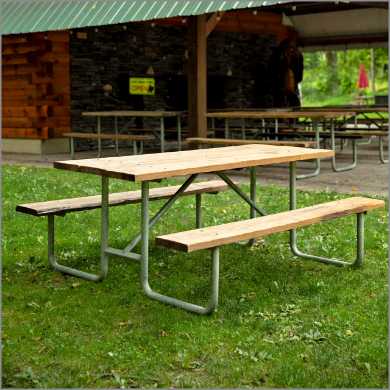
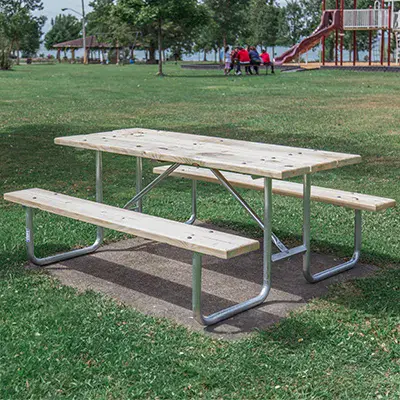
Jamestown Advanced Products offers recycled plastic as a seating and tabletop material on multiple commercial picnic table styles.

Options include select:

Depending on the model, buyers can also choose from different table lengths, galvanized or powder-coated frames, accessible configurations, and alternative seating materials.

For facilities serving the public, accessibility should be considered during the initial purchasing process rather than treated as an afterthought. Jamestown Advanced offers both ADA-accessible and Universal Access picnic table configurations for projects requiring accessible seating options.

Which Benches Are Available With Recycled Plastic Lumber?

Recycled plastic lumber is also available on several Jamestown Advanced bench styles, including select:

Bench configurations vary by model, with options including different lengths, galvanized or powder-coated frames, pad-mount installation, and in-ground installation.

The frame supporting RPL is important. Recycled plastic does not behave exactly like natural wood, so commercial furnishings should be engineered appropriately for the material. For example, Jamestown Advanced's Trailside Bench uses an additional center frame component when recycled plastic lumber is selected to provide proper support and stability.

Who Is Recycled Plastic Lumber Best For?

Best for Campgrounds and RV Parks

Campground furnishings remain exposed to rain, snow, sunlight, dirt, food spills, and constant seasonal use. RPL can reduce the amount of staining, sealing, sanding, and board maintenance required as operators prepare sites each season.

Best for Municipal Parks

Municipal maintenance departments often manage furnishings across multiple parks. Lower-maintenance seating can help reduce recurring maintenance work while providing consistent appearance throughout a park system.

Best for Schools and Universities

RPL picnic tables and benches work well in courtyards, outdoor learning spaces, athletic areas, residence areas, and pedestrian spaces where equipment may see frequent daily use.

Best for High-Moisture Environments

Properties near lakes, pools, rivers, or other wet environments may benefit from a material that does not absorb water or rot like traditional lumber.

Best for Organizations Focused on Lifecycle Costs

RPL is worth considering when the purchasing decision is based on years of ownership rather than initial price alone.

Best for Sustainability-Focused Projects

Organizations seeking products that incorporate recycled materials can use RPL as one component of a broader sustainability strategy.

How Do I Choose Between Recycled Plastic Lumber and Wood?

Start by considering how and where the picnic table or bench will actually be used.

  1. Evaluate the Environment
    Is the furniture exposed to rain, snow, irrigation, humidity, intense sunlight, or waterfront conditions? The more demanding the environment, the more valuable moisture and rot resistance can become.
  2. Consider Your Maintenance Capacity
    Ask who will maintain the furniture after installation. If your maintenance department already has a large seasonal workload, reducing staining, sealing, sanding, and board replacement may justify a higher upfront material cost.
  3. Compare Lifecycle Cost, Not Just Purchase Price
    A less expensive table is not necessarily the lower-cost table over ten or twenty years. Consider expected maintenance labor, materials, replacement components, and downtime.
  4. Decide What Appearance You Want
    Natural wood has a distinctive grain and character that some projects specifically require. RPL provides a more consistent manufactured appearance and several color choices without the variation found in natural lumber.
  5. Choose the Correct Frame
    Recycled plastic lumber should be installed on equipment engineered to properly support it. Do not assume boards can simply be substituted onto a frame designed for another material without considering support requirements.
  6. Consider Accessibility Early
    If the project serves the public, determine whether ADA-accessible or Universal Access tables are needed before finalizing quantities and site layouts.
  7. Coordinate Colors and Branding
    Choose RPL and frame colors together rather than independently. For campuses, municipalities, campgrounds, resorts, and branded facilities, ask whether custom colors or logos can help create a consistent site appearance.

What Are Common Mistakes When Buying Recycled Plastic Picnic Tables and Benches?

Comparing Only the Initial Price

One of the most common mistakes is comparing the purchase price of RPL directly with wood without considering maintenance costs. A lifecycle comparison usually provides a more useful picture.

Assuming RPL and Wood Behave Exactly the Same

They do not. Recycled plastic lumber has different material characteristics and may require different frame support. Purchase commercial furniture designed specifically for the selected material.

Ignoring the Frame

Durable boards do not compensate for an inappropriate frame. Evaluate frame construction, finish, mounting method, and intended application along with the seating material.

Choosing Color Without Considering Sun Exposure

Think about where the furniture will be located. Darker outdoor surfaces can become warmer in direct sunlight than lighter surfaces, regardless of material.

Forgetting Accessibility

Do not purchase an entire site worth of standard tables and then try to solve accessibility later. Plan accessible tables, routes, concrete pads, and clear floor space as part of the original project.

Overlooking Mounting Requirements

Benches may be available with pad-mount or in-ground installation. Determine site conditions before ordering so the correct mounting configuration is specified.

Assuming Every Product Has the Same Options

RPL availability, sizes, colors, mounting configurations, frame finishes, and customization options can differ by product. Confirm specifications for the exact model being considered.

Why Choose Jamestown Advanced Products for RPL Picnic Tables and Benches?

Jamestown Advanced Products has manufactured commercial campground and park equipment in Jamestown, New York, for more than 35 years.

Our American-made picnic tables and benches are designed for commercial outdoor applications where durability, functionality, and long-term performance matter. Products are manufactured and fabricated in-house, allowing Jamestown Advanced to offer multiple materials, frame configurations, finishes, mounting options, accessible designs, and customization opportunities.

Depending on the product, buyers can choose from:

  • Recycled plastic lumber
  • Treated or untreated lumber
  • Aluminum
  • Expanded metal
  • Decorative perforated metal
  • Galvanized frames
  • Powder-coated frames
  • Pad-mount or in-ground bench configurations
  • ADA-accessible picnic tables
  • Universal Access picnic tables
  • Custom colors on select products
  • Custom logos on select site furnishings

Jamestown Advanced's customization process can also incorporate organizational logos into select picnic tables and benches. Customers receive a digital proof for approval before custom components are manufactured.

Frequently Asked Questions About Recycled Plastic Lumber

Is recycled plastic lumber better than wood for picnic tables?

It can be, particularly when low maintenance, moisture resistance, rot resistance, and long-term outdoor exposure are priorities. Wood may still be preferred when initial cost or a natural wood appearance is the primary consideration.

Does recycled plastic lumber rot?

No. Recycled plastic lumber does not rot or decay like natural wood, making it especially useful for outdoor environments exposed to moisture.

Does recycled plastic lumber need to be stained or sealed?

Typically, no. Unlike natural wood, recycled plastic lumber does not require staining or sealing to protect it from moisture and decay.

Does recycled plastic lumber splinter?

Recycled plastic lumber does not develop wood splinters, which can make it attractive for picnic tables and benches where people frequently contact the seating surfaces.

Is recycled plastic lumber made from recycled material?

Yes. Jamestown Advanced Products' recycled plastic lumber is manufactured from post-consumer and post-industrial plastic material.

What colors of recycled plastic lumber does Jamestown Advanced offer?

Current standard RPL colors include Gray, Cedar, Green, and Brown.

Can I get an ADA-accessible picnic table with recycled plastic lumber?

Yes. Jamestown Advanced Products offers recycled plastic lumber on select ADA-accessible picnic table configurations.

Can recycled plastic lumber be used on park benches?

Yes. Jamestown Advanced offers recycled plastic options on several bench models, including select Economy, Trailside, Contour, and Hoop benches.

Is recycled plastic lumber maintenance-free?

No outdoor furniture should be considered completely maintenance-free. RPL still requires routine inspection and cleaning, and frames, hardware, and mounting points should be checked periodically. However, it eliminates many lumber-specific tasks such as staining, sealing, sanding, and treating wood against decay.

Find the Right Picnic Table or Bench for Your Property

Choosing between recycled plastic lumber and traditional wood ultimately comes down to how your furniture will be used, where it will be installed, how much maintenance your organization can support, and what you expect from the product over its service life.

For buyers looking for durable, low-maintenance commercial outdoor furniture, recycled plastic lumber is an option worth considering.

Jamestown Advanced Products manufactures American-made picnic tables, benches, and other commercial site furnishings at our facility in Jamestown, New York. Our team can help you compare materials, frame styles, accessible configurations, colors, mounting options, and customization possibilities for your project.

Explore our picnic tables and benches or contact Jamestown Advanced Products to discuss the right recycled plastic lumber configuration for your facility.